Thinking About Turkey Teeth? What the Evidence Shows
Clinically reviewed by Dr. Abinaash Kaur, DDS, RCDSO, on 2026-08-27. Dr. Kaur is a general dentist in Toronto (Bloor West Village) registered with the Royal College of Dental Surgeons of Ontario.
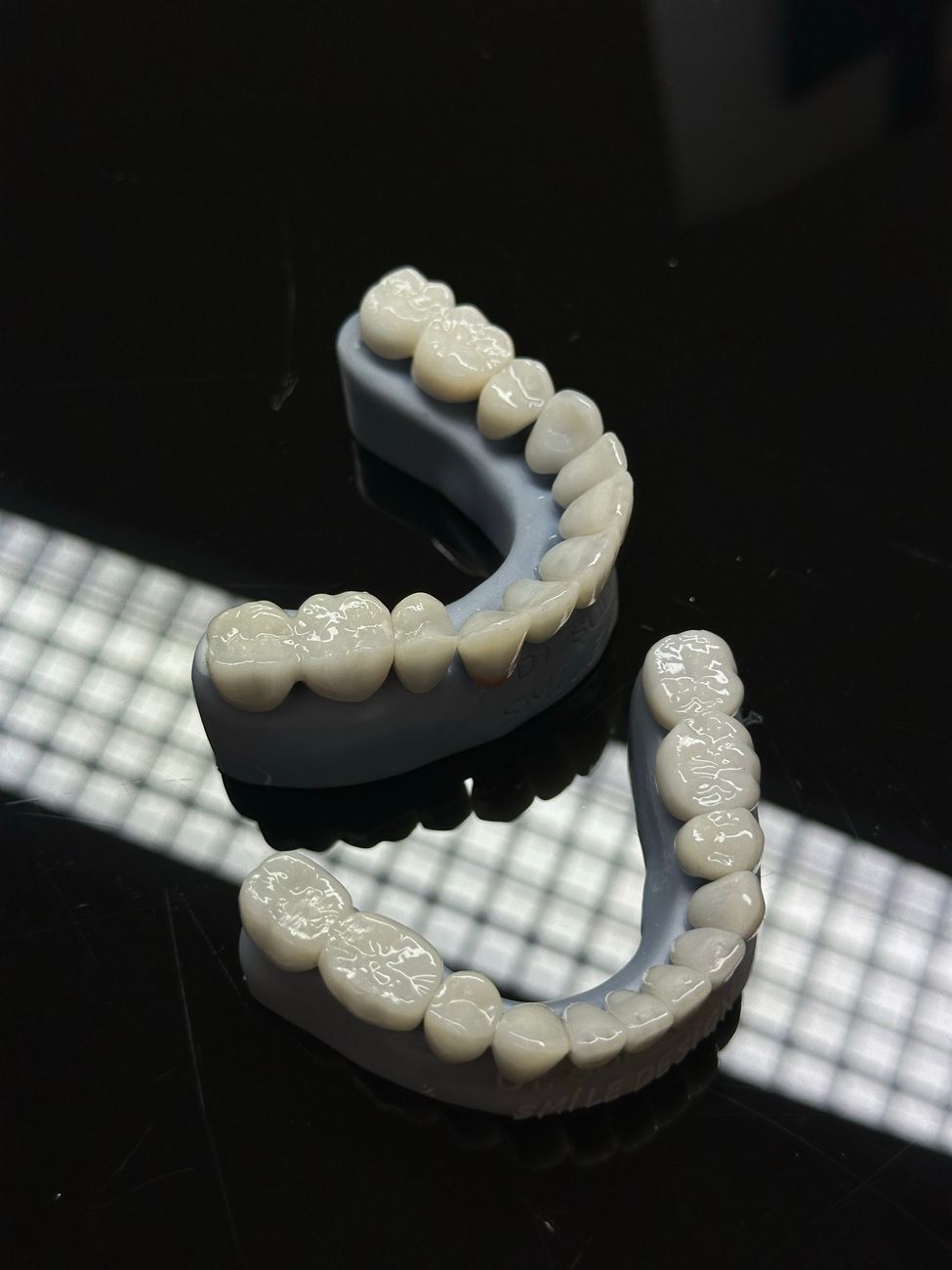
The single most useful thing to know is that the "veneers" in most overseas smile packages aren't veneers. They're crowns, and a crown removes roughly two thirds of the visible tooth instead of a thin outer layer (Journal of Prosthetic Dentistry via PubMed).
That one swap is where nearly every story I hear afterward begins. Not with a bad flight or a rushed clinic, but with a word that meant something different than the patient thought it did.
I've practised in Bloor West Village for about 25 years, and this comes up more than it used to. Usually it's someone in their twenties, they've done the math, and the math looks good.
So here's the evidence, including the part where the popular version of this story is unfair.
What are people actually being sold?
A veneer is a thin facing bonded to the front of a tooth. A crown covers the whole tooth, all the way around, which means the tooth underneath gets shaped down to a peg first.
The difference isn't cosmetic. When researchers weighed how much tooth structure each preparation removes, veneers and bonded restorations took away roughly 3% to 30% of the visible tooth by weight. Crown preparations took 63% to 72% (Journal of Prosthetic Dentistry via PubMed).
Same study, put another way. The tooth structure removed for a metal-ceramic crown was 4.3 times greater than for a veneer on the front surface alone (Journal of Prosthetic Dentistry via PubMed).
A UK dentist quoted in a British Dental Journal review put the language problem plainly: "They talk about veneers, mouldings bonded to the front of a tooth, but in reality, they are crowns, meaning much more aggressive tooth reduction" (British Dental Journal via PubMed Central).
Most people think they're buying a facing. Often they're buying the removal of most of the tooth.
Why does that difference matter so much?
Enamel doesn't grow back. Once a healthy tooth is shaped down for a crown, there's no version of the future where it goes back to being an untouched tooth.
What it becomes instead is a maintenance item. Pooled data from 67 studies puts five-year survival of a metal-ceramic single crown at about 94.7%, with most all-ceramic types in a similar range (Dental Materials via PubMed).
Those are good numbers. Read them the other way, though, and roughly one crown in twenty is already gone at the five-year mark, in studies, on teeth that mostly needed crowns in the first place.
Now apply that to a healthy 24-year-old with 20 crowned teeth. Each replacement takes a little more tooth. Some of them will need a root canal along the way, and we cover what that involves in our root canal guide. Our crown cost guide walks through what replacements involve here.
The price you're comparing isn't one price against another. It's one price against a cycle.
How often does this go wrong?
The British Dental Association surveyed 1,000 dentists about patients returning from treatment abroad. Most of them, 86%, reported treating people who were suffering consequences after treatment abroad (British Dental Journal via PubMed Central).
Respondents believed crowns and implant treatments were the most at risk of failure (British Dental Journal via PubMed Central). Those are exactly the two procedures the packages are built around.
On cost, the same review reports that remedial care in the UK ranged from at least £500 for 65% of respondents up to more than £1,000, while 20% put the cost of fixing complications above £5,000 (British Dental Journal via PubMed Central).
I'm not putting those figures here to frighten anyone. They're survey estimates from another country's dental system, and they say something narrow but useful: when this goes wrong, it tends to go wrong in a way that costs more than the original saving.
Is Turkey the actual problem?
Here's where the popular version of this story falls down, and I think it's worth being fair about.
The same British Dental Journal review analyzed 131 UK newspaper articles about dental tourism published between January 2018 and May 2023 (British Dental Journal via PubMed Central). Its finding on the country focus is worth quoting exactly: "Almost all of the articles about post-operative complications were Turkey-centric, primarily because the media were focusing on social media accounts using #TurkeyTeeth, as opposed to Turkey specifically being implicated in providing substandard dentistry" (British Dental Journal via PubMed Central).
Read that twice. The country in the headline is there because of a hashtag, not because the evidence singles it out.
The article counts make the same point. There were 0 articles in 2018 and 1 in 2019, then 59 in 2022 and 59 in 2023 (British Dental Journal via PubMed Central). Dentistry abroad didn't change that sharply in three years. Coverage of it did.
So the real subject here is heavily marketed cosmetic dentistry sold as a package, wherever it's sold. Turkey is the current name attached to it. There are skilled dentists there and unskilled ones, the same as anywhere, and I'm not in a position to grade a clinic I've never seen.
Why won't I lecture you about this?
Because the shaming is documented, and it doesn't help.
The same review found that UK tabloid coverage commonly amplified polarised social media rhetoric, "shaming or ridiculing people who have chosen to seek cosmetic dental procedures outside of the UK, especially those who have suffered post-operative complications" (British Dental Journal via PubMed Central).
I've had patients sit down and apologise to me before they've even opened their mouth. That's what the shaming produces. It doesn't stop anyone from going, and it does make people wait longer before they come in when something hurts.
Have no fear on that front. If you've had work done anywhere and something's bothering you, the useful appointment is the one you book.
What would I be checking before booking anything?
Four things, and they apply to a clinic here as much as to one overseas.
First, a diagnosis before a treatment plan. A plan built from photographs isn't a plan. It needs an examination and x-rays, and it needs to explain why each specific tooth needs work. We wrote a whole post on how to audit a treatment plan, including ours, in is my dentist upselling me.
Second, the actual word. Ask outright whether the plan is veneers or crowns, and how much of each tooth gets removed. If the answer moves between the two words, that's your answer.
Third, informed consent that includes the alternatives. In Ontario, consent to treatment has to cover the nature of the treatment, its risks and benefits, the alternatives, and what happens if you do nothing (Royal College of Dental Surgeons of Ontario). "What happens if I do nothing" is the question that separates a recommendation from a sale.
Fourth, who handles it if something fails in year three. Not year one. Year three, when you're home.
That last question is the one the supervision story keeps turning on. We traced a version of it through the collapse of the mail-order aligner companies in what happened to SmileDirectClub and Byte, and the pattern rhymes.
What if it's about colour or crowding?
The alternatives are the part I wish more people heard first, and the British Dental Journal authors made the same recommendation. They wrote that national guidance should explain the difference between cosmetic options, naming crowns and veneers versus Invisalign and whitening as the comparison patients need (British Dental Journal via PubMed Central).
A lot of what gets solved with 20 crowns is two separate problems wearing one costume.
If the complaint is colour, whitening changes colour without touching the tooth's structure, and we lay out what works in our teeth whitening guide. If the complaint is that teeth are crooked or overlapping, moving them is the conservative answer, and our Invisalign price guide covers what that runs. Where shape genuinely needs changing, our veneers guide compares veneers against bonding.
Where teeth are already missing, that's a different conversation again, and we cover it in our dental implants guide.
None of that is an argument for spending more. It's an argument for spending on the problem you have.
Frequently Asked Questions
Q: Are Turkey teeth just veneers? Usually not. Most overseas smile packages use crowns, which cover the whole tooth and require it to be shaped down first. Crown preparations remove about 63% to 72% of the visible tooth by weight, against roughly 3% to 30% for veneers and bonded restorations (Journal of Prosthetic Dentistry via PubMed). Ask which one is in the plan before anything else.
Q: Is dental tourism in Turkey unsafe? The evidence doesn't support singling out one country. A British Dental Journal review found the Turkey focus in press coverage came from social media accounts using #TurkeyTeeth "as opposed to Turkey specifically being implicated in providing substandard dentistry" (British Dental Journal via PubMed Central). The risk sits with heavily marketed package treatment on healthy teeth, not with a border.
Q: How often do people need repairs after treatment abroad? In a British Dental Association survey of 1,000 dentists, 86% reported treating people suffering consequences after treatment abroad, and respondents named crowns and implants as most at risk of failure (British Dental Journal via PubMed Central). That survey counts dentists who saw problems, so it can't tell you what share of all trips end badly.
Q: How long do crowns last? Pooled results from 67 studies put five-year survival of metal-ceramic single crowns at about 94.7%, with most all-ceramic types similar (Dental Materials via PubMed). Crowns are durable and they aren't permanent, so 20 of them on a young adult starts a replacement cycle that runs for decades.
Q: Can crowned teeth be undone later? No. Enamel doesn't regenerate, so a tooth prepared for a crown stays a prepared tooth. Future work means a new crown on what's left, and sometimes a root canal, which we cover in our root canal guide.
Q: What should I ask a clinic before I book? Ask whether the plan is crowns or veneers and how much tooth is removed, ask for a diagnosis with x-rays rather than a quote from photographs, ask what happens if you do nothing, and ask who treats a failure in three years. Ontario's consent rules require the nature of treatment, risks, benefits, alternatives and the consequences of no treatment to be covered (Royal College of Dental Surgeons of Ontario).
Q: I already had it done and something hurts. What now? Book an appointment and bring whatever paperwork you have. Nobody here is going to lecture you about where you had it done. The review above found that shaming coverage was aimed hardest at people who'd had complications (British Dental Journal via PubMed Central), and waiting because you're braced for a lecture only lets a fixable problem get bigger.
Reviewed by Dr. Abinaash Kaur, B.Sc., DDS (University of Toronto Faculty of Dentistry), who has practised general and family dentistry in Bloor West Village for about 25 years. This article is general oral health information, not a diagnosis or a substitute for an examination.
Weighing a smile package, or living with one already? Come in and we'll tell you what's actually on your teeth right now, what it would take to maintain it, and what the conservative version of the same result would look like. We're at 750 Annette Street in Bloor West Village, serving the Junction, High Park, and Baby Point. Book a visit with The Village Dentist and we'll take it from there.
