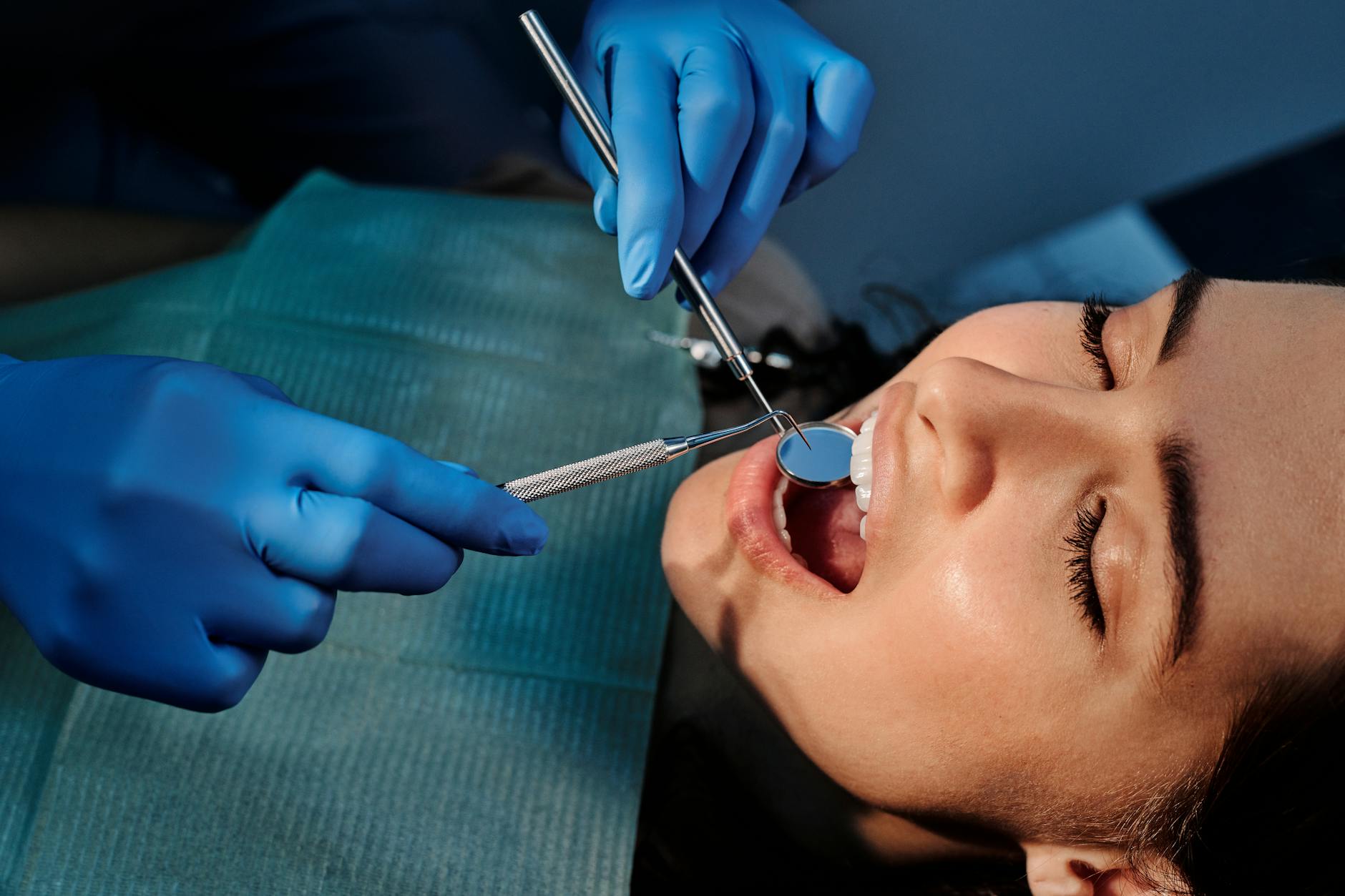
Root Canal in Toronto: Cost, the Pain Myth, and Extraction
Clinically reviewed by Dr. Abinaash Kaur, DDS, RCDSO, on 2026-10-19. Dr. Kaur is a general dentist in Toronto (Bloor West Village) registered with the Royal College of Dental Surgeons of Ontario.
In Toronto in 2026, a root canal usually runs about $600 to $1,800 depending on which tooth it is, and a crown on top after often adds another $1,200 to $2,000. That's the range I see across Toronto offices, and it's a ballpark from my chair, not a set price. Here's the part most people get wrong: the root canal isn't the thing that hurts. The toothache that sends you in is the pain. The treatment is what takes it away. Modern root canals are done with your tooth fully frozen (Canadian Dental Association). I've practised in Bloor West Village for about 25 years, and I'd rather give you the honest number and the honest feeling up front.
Does a root canal hurt?
Most people think a root canal is the most painful thing a dentist can do. What gives? The reputation is decades old, and the freezing and tools have changed a lot since then.
A root canal treats a tooth whose pulp, the soft nerve and blood supply inside, has become inflamed or infected (Canadian Dental Association). That infection is what causes the throbbing, the sensitivity to heat, the ache that keeps you up at night. By the time you're in my chair, the pain is already there. The treatment cleans out the infected pulp and seals the tooth, which is what settles the pain down.
The freezing does the heavy lifting
Have no fear. Before I start, I give you a local anesthetic so the tooth is numb (Canadian Dental Association). Most patients tell me afterward it felt a lot like getting a filling. It's the freezing going in that you notice most, and that's a small pinch, not the ordeal people brace for.
What the day or two after feels like
Your tooth can be tender for the first week or two, and that's normal. Bad pain or swelling after treatment are not common (Canadian Dental Association). One study that tracked people after treatment found the soreness dropped from 6 hours to 18 hours out, so it eases as the day goes on (PubMed Central). Over-the-counter pain relief handles most of it. If you're in real pain before you even get to us, that's the infection talking, and it's worth reading our guide on when a toothache is a dental emergency.
How much does a root canal cost in Toronto in 2026?
Comparing prices before you book? Smart. The cost tracks the tooth, because the number of canals inside changes how long the work takes.
Cost by tooth: front, premolar, molar
A front tooth usually has one canal, so it's the simplest, roughly $600 to $1,000 in my experience across Toronto offices. A premolar, further back, often has two canals and runs around $800 to $1,300. A molar at the back can have three or four canals, more anatomy to clean and seal, so it lands higher, roughly $1,000 to $1,800. Treat those as a ballpark from my office, not a quote. Every tooth is different, and a curved or extra canal moves the number.
| Tooth | Typical canals | Root canal (ballpark) |
|---|---|---|
| Front tooth (incisor/canine) | 1 | $600-$1,000 |
| Premolar (bicuspid) | 2 | $800-$1,300 |
| Molar (back tooth) | 3-4 | $1,000-$1,800 |
Why a crown usually comes after
Here's a cost most people don't see coming. After a root canal, especially on a back tooth, the tooth is more brittle and usually needs a dental crown to protect it from cracking. That crown is a separate fee, often $1,200 to $2,000 across Toronto offices, and it's part of your real total. If you have coverage, our breakdown of what CDCP pays toward crowns is worth a look before you book. So when you budget, budget for both parts.
Why two offices quote different numbers
Did you know the same molar can get two different quotes across the city? Ontario dentists set their own fees, so there's no single fixed price. The Ontario Dental Association publishes a Suggested Fee Guide, and it's exactly that, a reference for dentists to set fees that are fair and reasonable, not a mandatory price list (Ontario Dental Association). The guide goes to dentists, not to the public, which is one more reason online numbers vary. If a dentist charges above the guide, the College expects them to talk that through with you (RCDSO patient resource). So the only price that means anything is the written one after an exam.
Root canal vs extraction: which should you choose?
If a tooth is badly infected, you've got two roads. Save it with a root canal, or pull it and replace it. Which one wins? For most teeth, saving your own is the better long-term value.
Saving the tooth almost always wins
A root canal lets you keep your natural tooth instead of pulling it out (Canadian Dental Association). Your own tooth keeps the bone around it healthy, chews the way it always has, and doesn't need the teeth beside it touched. And the odds are good. A systematic review found that teeth survived after root canal treatment at 86% over 2 to 3 years, 93% over 4 to 5 years, and 87% over 8 to 10 years (PubMed). For many patients a root canal is the only realistic way to keep a tooth that's badly damaged or infected (Canadian Dental Association).
When extraction plus an implant is the honest call
Sometimes the tooth is too far gone, cracked below the gum or with too little structure left, and pulling it is the right move. But replacing it isn't cheap. A single dental implant in Toronto runs $3,000 to $6,500 all-in, more than a root canal and crown together, and it takes months. Our dental implant cost guide walks through why. In 25 years I've learned not to rush a patient toward an extraction when their own tooth can still be saved. Cheaper today can cost more over 20 years.
The math over the long run
Think cost per year, not just the sticker. A root canal and crown that lasts a decade or two often works out cheaper than an extraction plus an implant plus the crown on the implant. That's not true for every tooth, and I'll tell you straight when saving one isn't worth it. But the default, when the tooth can be saved, is to save it.
Does CDCP cover root canals?
Good news for cardholders. Unlike implants, root canal therapy is the kind of restorative care the Canadian Dental Care Plan is built to help with, subject to the plan's co-pay tiers and approval rules (Canada.ca). The details matter, though, including which teeth and how often. Our full walkthrough on whether CDCP covers root canals in 2026 lays out the specifics in plain language. Bring your card and your coverage details to the consult, and we'll tell you what's likely covered before anything starts.
How do you know you need a root canal?
Wait, is there a way to catch this before it's an emergency? Sometimes. Your tooth usually gives you warning signs.
The classic one is lingering pain, especially a throb that hangs around after something hot or cold, or an ache when you bite down. A tooth that suddenly darkens, a pimple-like bump on the gum, or swelling can all point to an infected pulp. Not every sensitive tooth needs a root canal, though. A lot of everyday sensitivity has simpler causes, which our guide on what's behind tooth sensitivity covers. The way to know is an exam and an X-ray. Try this: if a toothache wakes you up two nights running, book in rather than waiting it out. If you're wondering why the pain ramps up once you lie down, we've written about that too.
Getting a root canal in Bloor West Village: what to expect
What happens when you come in? No mystery. Here's the sequence.
We start with an exam and an X-ray to confirm the pulp is involved and to see the canals. I freeze the tooth fully. Then I clean out the infected pulp, shape and disinfect the canals, and seal them. Many teeth are done in one visit, some need two. After that, we plan the crown that protects the tooth for the long haul. Some days the schedule pushes me, and even then we take the time you need. If you've been living with a sore tooth, come in and let us look before it turns into a 2 a.m. problem.
Frequently Asked Questions
Q: How much does a root canal cost in Toronto in 2026? A root canal in Toronto typically runs about $600 to $1,000 for a front tooth, $800 to $1,300 for a premolar, and $1,000 to $1,800 for a molar, based on what I see across Toronto offices. A crown afterward often adds $1,200 to $2,000. Those are ballparks, not quotes. Ontario dentists set their own fees (Ontario Dental Association), so only an exam gives a real number.
Q: Does a root canal hurt? Not the way its reputation suggests. The tooth is fully frozen with a local anesthetic during treatment, and most patients say it feels like getting a filling (Canadian Dental Association). The pain people remember is usually the infection beforehand. Afterward the tooth can be tender for a week or two, but bad pain or swelling are not common (Canadian Dental Association).
Q: Is it better to get a root canal or pull the tooth? For most teeth, saving your own with a root canal is the better long-term value. It keeps your natural tooth rather than pulling it out (Canadian Dental Association), and treated teeth show strong survival, around 87% to 93% over the medium term (PubMed). Replacing a pulled tooth with an implant costs more and takes months. Extraction makes sense only when the tooth can't be saved.
Q: Do I need a crown after a root canal? Usually, yes, especially on back teeth. After the pulp is removed the tooth is more brittle and can crack, so a crown protects it. That's a separate fee, often $1,200 to $2,000 across Toronto offices. Front teeth sometimes do fine without one. If you have coverage, check what CDCP pays toward crowns first.
Q: Does CDCP cover root canals? Root canal therapy is the kind of restorative care the Canadian Dental Care Plan is designed to help with, subject to your co-pay tier and the plan's approval rules (Canada.ca). Which teeth and how often can vary, so read our detailed CDCP root canal coverage guide and bring your coverage details to the consult.
Q: How long does a root canal last? Often many years. A systematic review found teeth survived after root canal treatment at 86% over 2 to 3 years, 93% over 4 to 5 years, and 87% over 8 to 10 years (PubMed). A well-fitted crown and good daily care help a treated tooth last. Regular checkups catch any problem early.
Q: How do I know if I need a root canal? Warning signs include lingering pain after hot or cold, an ache when you bite, a darkening tooth, a bump on the gum, or swelling. Not every sensitive tooth needs one, since everyday tooth sensitivity often has simpler causes. An exam and X-ray confirm whether the pulp is infected.
Reviewed by Dr. Abinaash Kaur, B.Sc., DDS (University of Toronto Faculty of Dentistry), who has practised general and restorative dentistry in Bloor West Village for about 25 years. This article is general information, not a diagnosis or a quote. Book a consult for advice on your specific case.
Got a tooth that won't quit? We're at 750 Annette Street in Bloor West Village, serving the Junction, High Park, and Baby Point. Book a consult with The Village Dentist and we'll tell you exactly what your tooth needs and what it will cost.
Related reading: what dental care actually costs in Toronto in 2026
