Haven't Been to a Dentist in 10 Years? Read This First
Clinically reviewed by Dr. Abinaash Kaur, DDS, RCDSO, on 2026-10-19. Dr. Kaur is a general dentist in Toronto (Bloor West Village) registered with the Royal College of Dental Surgeons of Ontario.
If it's been ten years, nobody here is going to lecture you. The first visit back is a conversation and a look around, and you decide what happens after that.
I've been practising in Bloor West Village for about 25 years, and I've heard the same sentence hundreds of times. It usually arrives in a lowered voice, before I've even picked up a mirror: "I know, it's been a long time." Then the person braces for the telling-off. It doesn't come. It has never come, from me or from anyone on our team, and after 25 years I can tell you the telling-off wouldn't help anyone anyway.
So here's what the first visit back looks like, what we're checking for, and why the gap itself is not the problem you think it is.
Will the dentist judge me?
No. Here's the part most people don't know: the shame you're feeling is the single most-studied barrier in this whole field, and dentists read about it in the literature.
A qualitative study of 30 patients with phobic dental anxiety found that embarrassment was a complaint in all but three of them (PMC, The contribution of embarrassment to phobic dental anxiety). In nine of those cases, the fear of being judged by other people was the chief complaint, ahead of the drill, the needle, or anything else (PMC). The researchers also noticed something you might recognize in yourself: most of the embarrassed patients hid their smile with their lips, a hand, or by turning their head (PMC).
A 2025 scoping review pulled together 72 studies covering 2,455 people and described how the cycle works. Participants entered a cycle of accumulated dental disease, where embarrassment and shame about their worsening oral health increased their desire to avoid the dentist (PMC, Unmasking oral health stigma). One line from that review has stuck with me. Shame about oral health was described as "layered like an onion", taking primacy over barriers such as resources (PMC).
Read that again. Shame outranked money as the thing keeping people away.
The same review found what helps, and it isn't complicated. Empathetic listening, being friendly and reassuring, and looking at issues rather than blaming or lecturing with criticism (PMC). That's the job. If you've been putting this off because you're dreading a scolding, you're dreading a thing that good dentistry doesn't include.
You're not the only one who stopped going
Did you know about this? The long gap is closer to normal than you'd guess.
More than one-third of Canadians reported they had not visited a dental professional in the previous 12 months, based on 2022 Canadian Community Health Survey data (Statistics Canada). Cost is a large part of it. In the Canadian Oral Health Survey run from November 2023 to March 2024, 24% of Canadians aged 12 and older had avoided going to an oral health professional because of the cost (Statistics Canada). Among people with no dental insurance, that figure was 45% (Statistics Canada).
Money isn't the only reason, though. A German interview study of 20 long-term avoiders sorted them into four patterns: distance, disappointment, shame, and fear (PMC, Healthcare avoidance). Every one of those participants had suppressed dental visits for years (PMC).
I see all four walk through our door in the west end. The person who moved and never found a new office. The one who had a bad experience somewhere years ago and decided that was that. The one who's ashamed. The one who's frightened. If you're in the frightened group, our guide to dental anxiety and fear of the dentist goes deeper on managing the fear itself.
What happens at the first visit back?
Are you picturing a drill on day one? That's not how it goes.
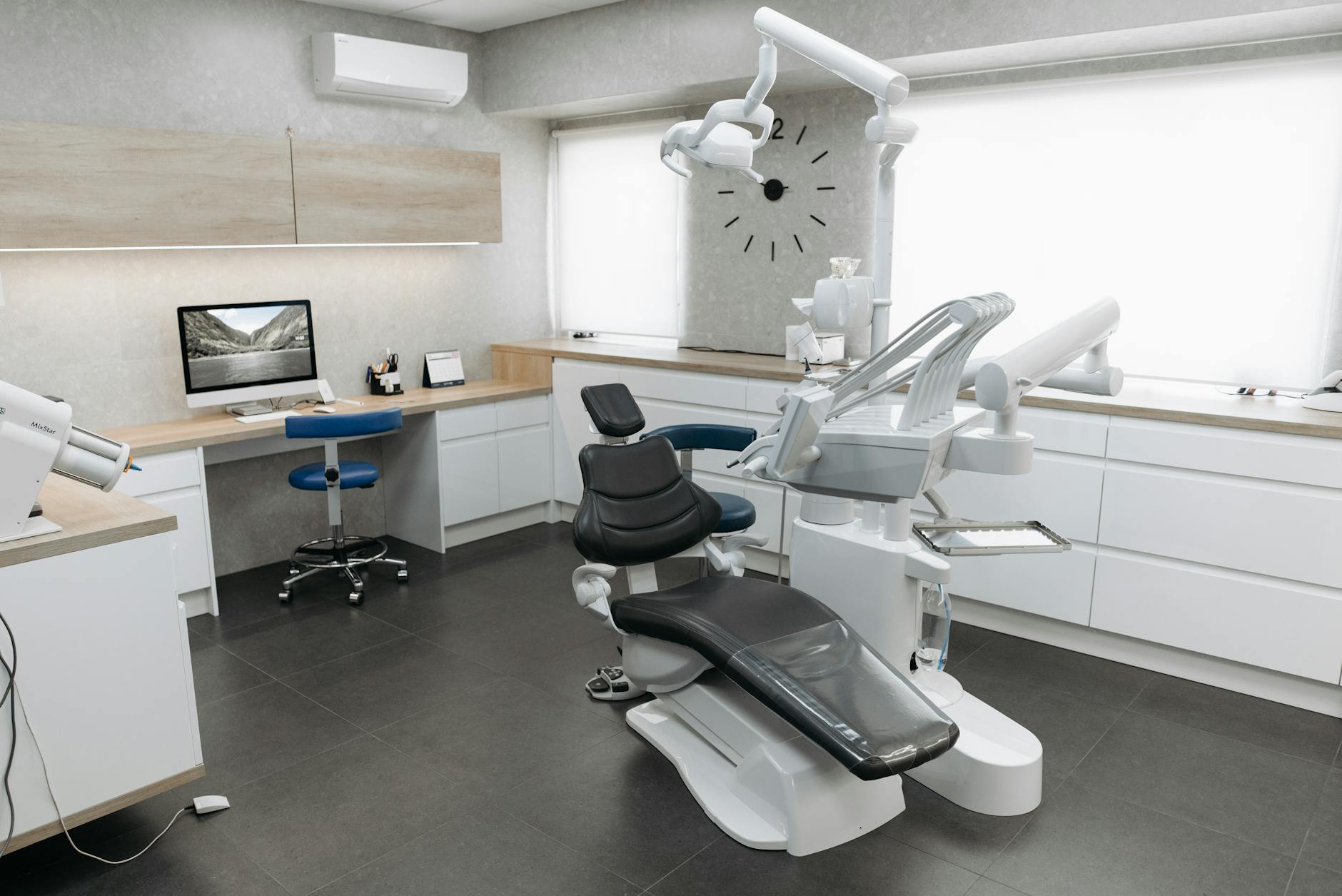
A first visit back is an examination. Your dentist takes a complete medical history so we know about any health conditions that affect dental treatment (Canadian Dental Association). Then we look: for damaged, missing or decayed teeth, for early signs of cavities, and at the condition of your gums, including periodontal pockets and inflammation (CDA).
We also check things you might not expect. Early signs of mouth or throat cancer, such as white lesions or blocked salivary glands. Signs that you clench or grind. The health and function of your jaw joint. The glands and lymph nodes in your neck (CDA). X-rays go on the list if they're needed, because decay under the gum line and bone loss from gum disease don't show up any other way (CDA).
At the end of that, you get information. What's going on, what your options are, and what each one involves. Nothing gets done to your teeth in that appointment unless you want it done and you've agreed to it.
One practical note from a working office: if you tell us on the phone that it's been a long time, we'll book you a longer appointment. That's it. That's the whole accommodation, and it makes the visit better for everyone. Some days the schedule pushes me, and even then we take the time you need.
Is it too late to fix?
Most people assume ten years of neglect means the damage is permanent. Here's what happens instead: a lot of it is more reversible than you'd think, and the parts that aren't are usually still manageable.
Gum disease. It's a bacterial infection of the tissues that hold your teeth in place. It develops slowly and often without causing any pain, which is exactly why it goes unnoticed for years (Canadian Dental Association). In its early stages it can be turned around, or reversed (CDA). The warning signs are a change in gum colour, gums that bleed whenever you brush or floss, bad breath that won't go away, and shiny, puffy or sore gums (CDA).
If any of that sounds familiar, our post on bleeding gums and gum disease explains what stage those signs point to.
What if it's gone past the early stage? Even then the picture isn't hopeless. In a published 12-year follow-up, a patient with severe periodontitis and an initially poor prognosis was treated non-surgically, with scaling and root planing plus regular maintenance. All but one tooth in the upper jaw were maintained in a state of acceptable health, function, and appearance (PubMed, Nonsurgical periodontal therapy 12-year follow-up). That's a single case report, not a guarantee for everyone, and the outcome depended on the patient showing up for maintenance appointments (PubMed). It shows what's possible with the deep cleaning route rather than surgery.
That deep cleaning has a name, scaling and root planing, and our post on deep cleaning and what it costs walks through when a regular cleaning isn't enough.
The honest version: after a long gap, some teeth need fillings, some need crowns, and occasionally one is past saving. What I don't see is what people fear most, which is a full mouth of unfixable problems. That's rare.
Why the waiting costs more than the dentistry
Are you telling yourself you'll go when something starts hurting? That's the plan that gets expensive.
Researchers surveyed 6,112 Australian residents to test what they called the vicious cycle of dental fear (PMC, The vicious cycle of dental fear). The pattern they found: 29.2% of people who were very afraid of the dentist had delayed visiting, poor oral health, and symptom-driven treatment seeking, compared with 11.6% of people with no dental fear (PMC). Among people with very high dental fear, 67.3% said their usual reason for a visit was a problem, against 44.9% of people with no fear (PMC).
The authors describe fear, delayed visiting, more dental problems, and symptom-driven treatment as a linked chain that feeds back into the fear (PMC).
That chain is the thing to break, and it's cheaper to break early. A soft spot caught at an exam is a filling. The same tooth left until it wakes you up at 3am is a root canal and a crown, or an extraction. Nothing about that is a moral failing. It's just how decay works when it's given a decade of quiet.
If fear is what's holding you back rather than shame, the evidence-based treatment for dental phobia is exposure-based cognitive behavioural therapy (PMC, Treatment of Dental Anxiety and Phobia). Short of that, there are comfort measures and sedation options worth knowing about, and our post on sedation dentistry options covers what's available in Ontario.
You're the one who decides what gets done
Have no fear about losing control of this. Under Ontario rules, you're the one making the decisions, and that isn't a courtesy we extend. It's the law.
The Royal College of Dental Surgeons of Ontario puts it directly. Respect for patient autonomy recognizes a patient's right to make informed decisions about their own health care based on their personal values, beliefs, and circumstances (RCDSO, Informed refusal). Dentists have a responsibility to inform, educate, and advise their patients, but they must not make treatment decisions on their behalf (RCDSO).
For consent to be valid, your dentist has to tell you the nature of the treatment, the expected benefits, and the material risks and material side effects (RCDSO, Consent to treatment). The College also tells dentists to allow time for patients to consider non-urgent, elective or complex treatment, and notes that a written treatment letter lets patients review details at their own pace and seek a second opinion (RCDSO).
You can also say no. If you decline a recommendation, it isn't enough for the dentist to note the refusal. They have to secure your informed refusal, based on your understanding of the facts and the implications of not proceeding (RCDSO).
In practice that means you can come in, get the full picture, and go home and think about it. Plenty of people do.
What it costs, and how to not get surprised
Wait, is there a way to know the price before you commit? Yes, and you should ask for it.
A first visit back is usually an exam, x-rays, and a cleaning. Across Toronto offices I'd expect that combination to land somewhere in the low hundreds, with the cleaning cost depending on how much build-up there is after a long gap. That's a ballpark, not a set price, and the only honest number comes after we look. Deep cleaning, if you need it, is priced by quadrant and costs more.
Two things protect you here. First, ask for a written treatment plan with the fees on it before anything is booked. Second, if you have insurance, ask us to send a predetermination, which is the insurer telling you in writing what they'll cover before the work happens.
If you don't have workplace coverage, check whether you qualify for the Canadian Dental Care Plan. Our post on what the CDCP actually covers breaks down which services are included. Given that 45% of uninsured Canadians have skipped care over cost, this is worth ten minutes of your time (Statistics Canada).
Choosing only the work your plan covers is a legitimate choice, and it's one we meet without comment. We'd rather see you for what you can manage than not see you at all.
Frequently Asked Questions
Q: Will my dentist be angry that I haven't been in 10 years? No. Research on dental avoidance shows shame and embarrassment are among the main reasons people stay away, and that clinicians who listen and avoid blaming or lecturing get better results (PMC). You're also far from alone. More than one-third of Canadians hadn't seen a dental professional in the previous 12 months as of 2022 (Statistics Canada).
Q: What happens at the first appointment after a long gap? An examination, not treatment. Your dentist takes a medical history, checks for decay and damaged teeth, examines your gums for pockets and inflammation, screens for signs of oral cancer, checks your jaw joint and neck glands, and takes x-rays if they're needed (Canadian Dental Association). You leave with a plan and a price, and you decide what to do next.
Q: Is it too late to save my teeth? Usually not. Gum disease in its early stages can be reversed (CDA). Even advanced cases can respond to non-surgical treatment with maintenance: one 12-year follow-up of a severe periodontitis patient with a poor initial prognosis kept all but one upper tooth in acceptable health and function (PubMed). That's a single case, not a promise, but the fatalism most people arrive with isn't warranted.
Q: Can I ask the dentist to stop, or to not do something? Yes. Ontario dentists must respect your right to make your own decisions and are not permitted to make treatment decisions for you (RCDSO). If you decline a treatment, the dentist has to document your informed refusal rather than just proceeding (RCDSO). You can also take the plan home and think it over (RCDSO).
Q: Why do my gums bleed if nothing hurts? Because gum disease develops slowly and often without pain, and bleeding when you brush or floss is one of its warning signs (CDA). Painless doesn't mean harmless. Left untreated, teeth become loose and are in danger of falling out (CDA).
Q: I'm terrified, not just embarrassed. What are my options? Say so when you book, and we'll plan around it. For severe dental phobia, exposure-based cognitive behavioural therapy is the evidence-based treatment (PMC). For everyday fear, comfort measures, a stop signal you control, and sedation options cover most people. Our guides to dental anxiety and sedation options go through both.
Editor’s note, updated October 19, 2026: the Canadian Dental Association moved two of the pages this post cites, so we replaced those links with the association’s current pages. The information they support hasn’t changed.
Reviewed by Dr. Abinaash Kaur, B.Sc., DDS (University of Toronto Faculty of Dentistry), who has practised general and family dentistry in Bloor West Village for about 25 years. This article is general information about dental care and patient rights in Ontario, not a diagnosis or a substitute for an examination.
Been years, and dreading the phone call? Make it anyway. We're at 750 Annette Street in Bloor West Village, serving the Junction, High Park, and Baby Point. Tell us on the phone that it's been a while and we'll book you extra time. Book a visit with The Village Dentist and you'll leave that first appointment knowing exactly where you stand, with a written plan and no pressure to start today.
