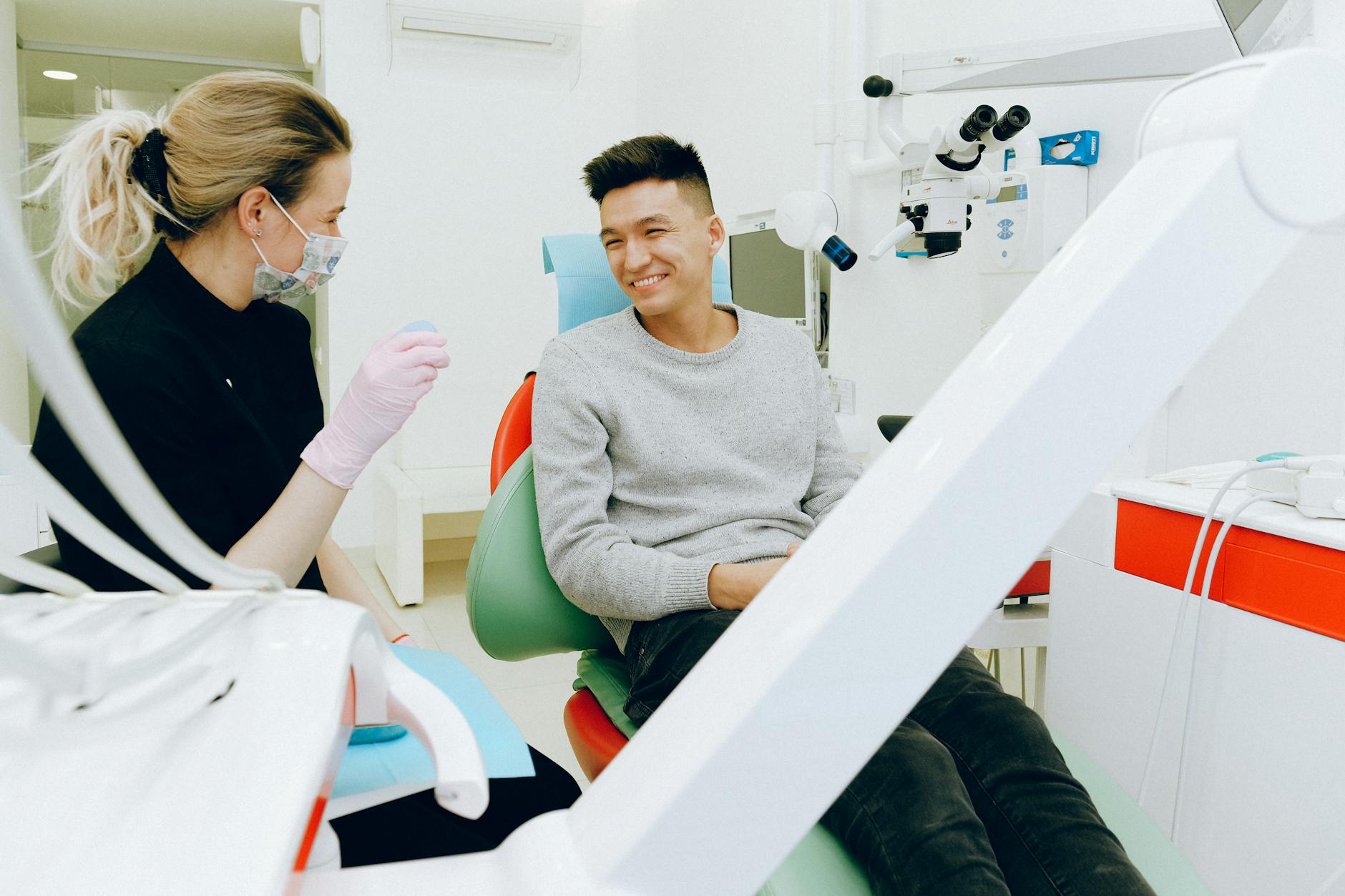
Sedation Dentistry Toronto: Options If You're Scared
Clinically reviewed by Dr. Abinaash Kaur, DDS, RCDSO, on 2026-07-28. Dr. Kaur is a general dentist in Toronto (Bloor West Village) registered with the Royal College of Dental Surgeons of Ontario.
If fear is what's keeping you out of the chair, you have options, and they run from a bit of laughing gas all the way up to sleeping through the appointment. In Ontario those levels are minimal sedation (nitrous oxide and oxygen, or a mild oral sedative), oral moderate sedation, parenteral conscious sedation, and deep sedation or general anesthesia (RCDSO). I've practised in Bloor West Village for about 25 years, and here's the part most articles skip: every dentist who gives any level of sedation, including the mildest, needs authorization from the College, and you can look yours up before you book. Here's what each level involves and what to ask for.
Do you feel like you're the only one dreading this?
You're not. Dental fear is common enough that I see it every week, in people of every age.
A 2021 systematic review and meta-analysis put the global rate of dental fear and anxiety in adults at 15.3%, with 12.4% of adults at a high level and 3.3% at a severe level (PubMed). So in a full waiting room, a few people are quietly white-knuckling it.
Here's what concerns me more than the fear itself. Avoiding the dentist feeds it. Dental anxiety is often described as a vicious cycle, where avoiding care leads to poor oral health and feelings of shame and inferiority, and those feelings keep the anxiety high (PMC). The longer you stay away, the bigger the eventual visit, and the bigger visit confirms the fear. That's the trap. If you're still at the "I can't make myself call" stage, our guide to dental anxiety deals with that part. If what's keeping you away is shame about how long it's been rather than fear of the chair, our post on going back after a long gap is written for that. This post is about what comes next.
What are the sedation levels in Ontario?
Sedation is medication that lowers your awareness and anxiety during treatment. The level isn't named after the drug. It's named after how awake you are.
Here's the ladder, in plain terms.
| Level | What it feels like | Common form |
|---|---|---|
| Minimal sedation | Relaxed, awake, responding normally | Nitrous oxide and oxygen, or a mild oral sedative |
| Oral moderate sedation | Drowsy, still answering when spoken to | A stronger sedative pill |
| Parenteral conscious sedation | Drowsy and hazy, still responding | Sedative through an IV |
| Deep sedation | Hard to rouse | IV drugs |
| General anesthesia | Fully asleep | IV or inhaled drugs |
Most anxious adults never need the top of that ladder. The bottom rung handles a lot.
Did you know you can look this up?
This is the bit worth the whole post. Sedation in Ontario is regulated, and the register is public.
Dentists must have authorization from the College to administer any level of sedation, including minimal sedation, in a dental facility (RCDSO). To check whether a dentist holds it, you search the public register (RCDSO). Those authorizations expire every year on March 31st and have to be renewed (RCDSO).
The office matters too, not just the dentist. Dental facilities where practitioners administer oral moderate, parenteral conscious sedation, deep sedation or general anesthesia must have a current facility permit (RCDSO). Offices where dentists only give minimal sedation, meaning nitrous oxide and oxygen or oral minimal sedation, don't require a sedation facility permit (RCDSO). Facility permits are searchable on that same register (RCDSO).
One rule surprises people. Mixing a pill with laughing gas isn't "minimal" anymore. Any combination of an oral sedative with nitrous oxide and oxygen, regardless of dosing, has to meet all the requirements for oral moderate sedation, including authorization and a facility permit (RCDSO). Same idea for kids: a dentist must hold at least oral moderate authorization to give any oral sedation to a patient under 12 (RCDSO).
Try this: before you book sedation anywhere, ask which level they're authorized for, and check the register yourself. A good office won't blink at the question.
Does laughing gas do anything, or is it a placebo?
Most people think nitrous is just a gimmick to keep you quiet. What gives? The evidence says it does real work.
Nitrous oxide and oxygen is inhaled through a small nose piece. It relaxes you within minutes, you stay awake and talking, and it wears off quickly once you're breathing plain oxygen again.
In a randomized controlled trial of people getting root canal treatment on a painful tooth, nitrous oxide sedation produced a significant reduction in anxiety and pain during treatment (PMC). Pain during the freezing itself dropped hard, from a mean of 85.23 in the control group to 21.63 with nitrous (PMC). If the needle is your sticking point, that number is the one to notice.
How does it compare to the heavier options? A 2025 randomized trial in adults compared oral midazolam, nitrous oxide, and IV sedation. IV sedation worked fastest, with onset around 3.4 minutes, versus 5.2 minutes for nitrous and 12.7 minutes for the oral pill (PMC). IV scored highest for anxiety reduction and satisfaction, at 92% very satisfied, with nitrous close behind at 84% (PMC). The trade-off is safety. That trial saw adverse effects in 10% of the IV group, mainly respiratory depression, versus 8% with nitrous (PMC). Its conclusion was blunt: IV sedation is the most effective method for managing dental anxiety in adults, though it carries a higher risk of adverse effects (PMC).
More sedation isn't automatically better sedation. It's a ladder, and you climb only as high as you need.
The myth: sedation is the only way out
Here's where I'll be honest with you. Sedation gets you through the appointment. It doesn't touch the fear.
Systematic reviews and meta-analyses have indicated cognitive behavioural therapy as the most effective treatment for adults with severe dental anxiety (PMC). The goal of that work is to build your own confidence to manage dental care regularly, without depending on one specific person or one specific drug (PMC). Pretty much the opposite of needing a pill every time.
So I think of it in two tracks. Sedation is the bridge that gets you in the door and gets the urgent work done. Behavioural work is what makes the next visit easier than this one. Plenty of my patients start sedated and end up not needing it. That's the goal, not a failure.
What does sedation cost, and is it covered?
Straight answer: it depends on the level and the time, and I'm not going to invent a number for you.
Nitrous is usually the least expensive add-on and is often billed by the time it's running. IV sedation and general anesthesia cost considerably more, because they involve more training, more equipment, more monitoring, and sometimes a second clinician. Ontario dentists aren't required to follow any fee schedule. They set their own fees, so a dentist's fees may fall above or below the provincial guide (Ontario Dental Association).
Insurance coverage for sedation is patchy. Many plans cover little or none of it for routine treatment, and cover more when there's a medical reason. Ask for the fee codes and a written estimate before the day, then send that to your insurer. Getting a surprise at the front desk is a lousy end to a visit you were already dreading.
What safety looks like on the day
Should you worry about monitoring? Fair question, and the rules here are strict.
If you take an oral sedative at the office, you must be continuously monitored from the time you take it (RCDSO). Not left in a waiting room to drift. The College also specifies who can do that watching: dental assistants and dental hygienists aren't permitted to monitor patients after an oral sedative has been dispensed (RCDSO). Vitals are taken before sedation starts and through the whole appointment until you're fit for discharge (RCDSO). For anything past minimal sedation, plan on someone driving you home.
What to ask for in Bloor West Village
Have no fear about saying it out loud. The most useful thing you can do is tell us you're anxious before you sit down, not after.
Say it when you book. Ask for a first appointment where nothing gets done except talking and looking. Ask us to explain before we do anything, agree on a hand signal that means stop, and take breaks when you need them. Ask for extra time so nobody's rushing. Some days the schedule pushes me, and even then we take the time you need, because a patient who feels rushed doesn't come back.
In 25 years I've watched a lot of people from Baby Point and the west end walk in after a decade away, convinced I'd lecture them. I don't. I've seen it all, and none of it shocks me. Once you're back on a regular cleaning schedule, visits get short and boring, which is exactly what you want. The people who stay away are the ones I end up seeing at their worst, in pain, needing emergency care on a tooth that could have been a small filling three years ago.
Frequently Asked Questions
Q: What sedation options are available at a Toronto dental office? In Ontario the levels are minimal sedation (nitrous oxide and oxygen, or a mild oral sedative), oral moderate sedation, parenteral conscious sedation, and deep sedation or general anesthesia (RCDSO). Not every office offers every level. Offices giving oral moderate sedation or anything above it must hold a current facility permit, while offices giving only nitrous oxide or oral minimal sedation don't need one (RCDSO). Ask your office which level they're authorized for.
Q: How do I check whether my dentist is authorized to give sedation? Search the College's public register. Dentists must have authorization from the College to administer any level of sedation, including minimal sedation (RCDSO), and you can verify a dentist's authorization and a facility's permit there (RCDSO). Authorizations expire every March 31st and must be renewed (RCDSO).
Q: Does nitrous oxide work for dental anxiety? Yes, and there's evidence behind it. In a randomized controlled trial during root canal treatment, nitrous oxide significantly reduced both anxiety and pain, with pain during the freezing falling from a mean of 85.23 to 21.63 (PMC). In a 2025 adult trial, 84% of the nitrous group were very satisfied, close to the 92% seen with IV sedation (PMC). You stay awake, and it clears quickly.
Q: Can I take a sedative pill and use laughing gas at the same time? Only at an office authorized for oral moderate sedation. Any combination of an oral sedative with nitrous oxide and oxygen, regardless of dosing, must meet all requirements for oral moderate sedation, including authorization and a facility permit (RCDSO). The combination isn't treated as minimal sedation, even at a small dose.
Q: Is sedation dentistry safe? It's regulated tightly, and the risk goes up as the level goes up. A 2025 adult trial recorded adverse effects in 10% of the IV sedation group, mainly respiratory depression, versus 8% with nitrous oxide (PMC). If you take an oral sedative, you must be continuously monitored from the moment you take it, and assistants and hygienists aren't permitted to do that monitoring (RCDSO). Choose the lowest level that gets you through.
Q: Is there a way to fix dental anxiety without sedation? Yes, and it lasts longer. Systematic reviews have indicated cognitive behavioural therapy as the most effective treatment for adults with severe dental anxiety (PMC), with the aim of building your confidence to handle regular dental care on your own (PMC). Simple things help too: telling us you're anxious, agreeing on a stop signal, booking a talk-only first visit, and getting back to short routine appointments.
Reviewed by Dr. Abinaash Kaur, B.Sc., DDS (University of Toronto Faculty of Dentistry), who has practised general and restorative dentistry in Bloor West Village for about 25 years. This article is general information, not a diagnosis or a quote. Book a consult for advice on your specific case.
Been putting off the dentist because you're scared? We're at 750 Annette Street in Bloor West Village, serving the Junction, High Park, and Baby Point. Book a consult with The Village Dentist, tell us you're anxious when you call, and we'll go at your pace.
