Deep Cleaning Teeth Cost Toronto: Do You Need One?
Clinically reviewed by Dr. Abinaash Kaur, DDS, RCDSO, on 2026-07-20. Dr. Kaur is a general dentist in Toronto (Bloor West Village) registered with the Royal College of Dental Surgeons of Ontario.
A deep cleaning in Toronto usually runs somewhere around $200 to $350 per quadrant, so a full mouth lands roughly between $800 and $1,400, and that's a ballpark from my office rather than a set price. The reason it costs more than a regular cleaning is that it's a different procedure: your hygienist is cleaning the root surfaces below the gum line, not polishing the parts you can see. I've practised in Bloor West Village for about 25 years, and the question I get most is whether the deep cleaning was a real recommendation or an upsell. Here's how to tell.
Is a deep cleaning the same as a regular cleaning?
No, and this is where most of the confusion starts.
A regular cleaning works above the gum line and slightly under it. Your hygienist removes plaque and tartar from the surfaces of your teeth, then polishes. It's a maintenance visit for gums that are healthy.
A deep cleaning has a real clinical name: scaling and root planing. In the early stages of gum disease, treatment usually involves removing the plaque and calculus in the pockets around the tooth and smoothing the root surfaces, and that procedure is called scaling and root planing (Ontario Dental Association). The scaling part removes the hardened deposits. The root planing part smooths the root so the gum tissue can reattach instead of staying inflamed.
So one is housekeeping. The other is treatment for an active infection.
What gives? Your gums bleed even though you brush
Brushing every day and your gums still bleed? That's the single most common reason someone ends up needing this.
Plaque is soft and comes off with brushing and flossing. If it stays, plaque accumulates minerals and hardens into tartar, also called calculus (Canada.ca). Once it's hard, your toothbrush can't touch it. Tartar can spread below the gum line, where it can be safely treated by an oral health professional using manual scaling tools or an ultrasonic device (Canada.ca).
That's the honest answer to "but I brush twice a day." You probably do. Brushing doesn't remove tartar that's already hardened three or four millimetres under your gums. Nothing you buy at the drugstore does either. If bleeding is your main symptom, our post on bleeding gums walks through the causes in more detail.
Gingivitis or periodontitis: which one are you?
This is the question that decides whether you need a deep cleaning at all, and it's worth understanding before you say yes to anything.
Gingivitis is inflammation of the gums, the early and mild form of gum disease (Canada.ca). Symptoms include pain in the gum area, persistent bad breath, red and swollen gums, and blood on your toothbrush or floss (Canada.ca). Good news here: maintaining good oral hygiene can help prevent or reverse gingivitis (Canada.ca). Gingivitis is the reversible stage (Ontario Dental Association).
Periodontitis is the advanced form, and it affects the bone and gums that hold your teeth in place (Canada.ca). Gums pull away from the teeth, bone loss happens, and periodontal pockets form between the teeth and gums (Canada.ca). Here's the part I need you to hear: it isn't usually possible to reverse the damage caused by periodontitis (Canada.ca). If gingivitis goes untreated and pockets form, that stage is irreversible (Ontario Dental Association).
We measure this with a small probe, six spots per tooth. Three millimetres or less is healthy. Four and up means a pocket. When you see a hygienist calling out numbers to an assistant, that's what's happening, and you're allowed to ask for your numbers.
Pretty much the whole decision rests on those readings plus an X-ray showing bone level. Bleeding alone with 1 to 3 millimetre pockets is gingivitis, and it doesn't need a deep cleaning. Bleeding with 5 millimetre pockets and bone loss does.
What happens during a deep cleaning?
Have no fear. This part sounds worse than it feels.
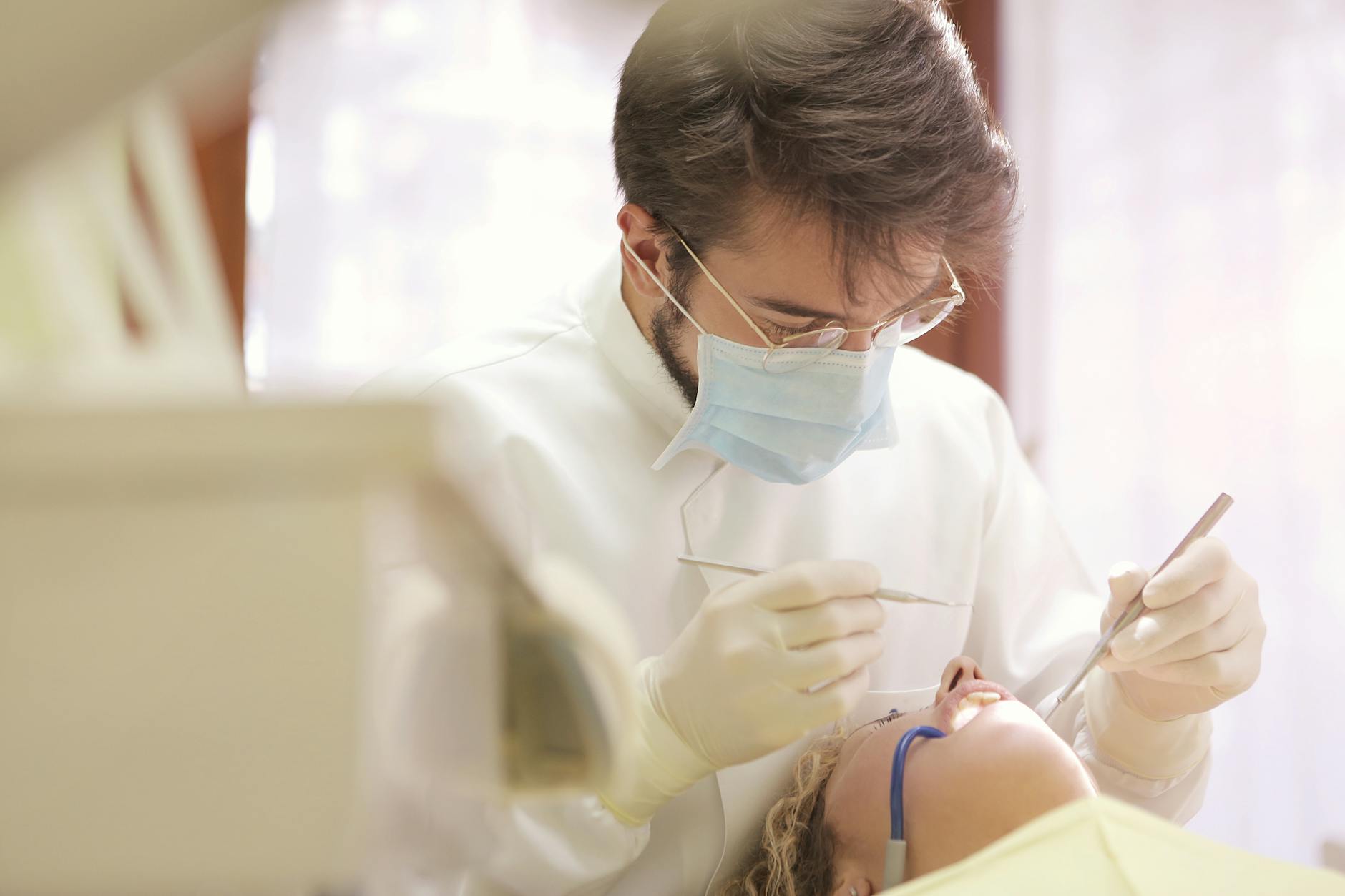
We freeze the area first, usually one or two quadrants per appointment, so most people need two visits. Then the hygienist works below the gum line with an ultrasonic scaler and hand instruments, clearing the tartar off the root and smoothing what's left. It takes about 45 minutes to an hour per side.
Afterwards your gums will be tender for a day or two, and your teeth may be sensitive to cold for a few weeks as the gums tighten back up. That sensitivity is normal and it fades. Our post on tooth sensitivity covers what helps in the meantime.
Then we wait. Gums need time to respond, so we re-measure at about six to eight weeks. Improvement in the deeper pockets keeps happening over a longer window, roughly 9 to 12 months after non-surgical treatment (PMC).
Does it work?
Fair question, and I'd rather show you numbers than promise you anything.
The expected pocket depth reduction after non-surgical periodontal therapy is about 1.29 mm for moderate pockets and 2.16 mm for initial deep pockets (PMC). That sounds small on paper. In a mouth, a 5 millimetre pocket dropping to 3 or 4 is the difference between a site you can clean at home and one you can't.
Bigger picture: one year after non-surgical treatment, the share of sites measuring 3 mm or less went from 39.06% to 64.11% (PMC). In the same analysis, the mean number of pockets at 5 mm or deeper fell from 39.01 before treatment to 14.13 after (PMC).
Read that honestly. It's a large improvement, and it isn't a cure. Some pockets stay deep, and those are the ones that may need a referral to a gum specialist.
What does a deep cleaning cost in Toronto?
Straight answer, no dancing around it.
From my office, scaling and root planing generally runs about $200 to $350 per quadrant, which puts a full mouth in the range of $800 to $1,400. A routine cleaning and exam is closer to $150 to $250. Those are ballparks, not quotes, and yours depends on how many quadrants you need and how much tartar is down there.
Why the spread across the city? Ontario dentists aren't required to follow any fee schedule. They set their own fees, so a dentist's fees may fall above or below the provincial guide (Ontario Dental Association). Two offices six blocks apart can price the same procedure differently and both be acting properly.
One thing to insist on: ask for the fee codes and a written estimate before you book, then send it to your insurer for a predetermination. Most plans cover scaling in time units, and many cap the units per year. Knowing your cap before the appointment beats finding out at the front desk. If you're on the federal plan, our post on what the Canadian Dental Care Plan covers for cleanings and exams has the coverage details.
The myth: one deep cleaning fixes it forever
Most people think a deep cleaning is a one-time repair, like fixing a leak. Here's what happens instead.
Scaling and root planing removes the bacteria and the surface they're clinging to. Those bacteria come back. What determines whether the pockets stay shallow is what you do daily and how often you come in after that.
The Ontario Dental Association puts it plainly: combined with proper daily home care, scaling and root planing is usually all that's required to stop the disease from developing further (Ontario Dental Association). The home care half isn't optional. It's half the treatment.
In practice that means cleaning between your teeth every day, since a brush can't reach the surfaces where teeth touch. Whether you use string floss or a water flosser matters less than doing it, and our floss comparison covers which suits which mouth. It also means shorter recall intervals, usually three or four months instead of six, so we catch a pocket that's creeping back while it's still small. Our post on how often you should get a cleaning explains how we pick that number.
There's one more reason I push on this. Gum inflammation doesn't stay in your mouth, and the links to the rest of your health are worth reading about in our post on the mouth as the front door to your body.
How to tell a real recommendation from an upsell
Did you know you can check this yourself? You can, and you should.
Ask these four things before agreeing. What are my pocket depths, tooth by tooth? Can I see the X-rays showing bone loss? How many quadrants, and why those ones? What happens if I do a regular cleaning now and re-measure in three months?
A recommendation built on real disease comes with numbers. A hygienist who can read you 5s and 6s off a chart and point at bone loss on a film is describing something that exists. If nobody can produce a periodontal chart, ask why not.
I'll be honest about the other direction too. In 25 years I've seen plenty of people from Baby Point and the west end decline a deep cleaning, come back three years later, and need extractions on teeth we could have saved for a fraction of the cost. Some days the schedule pushes me, and I still take the time to walk through the chart, because a patient who understands the numbers is the one who follows through.
Frequently Asked Questions
Q: How much does a deep cleaning cost in Toronto? From my office it generally runs about $200 to $350 per quadrant, so a full mouth is roughly $800 to $1,400. That's a ballpark, not a quote. Costs differ across the city because Ontario dentists aren't required to follow any fee schedule, and their fees may fall above or below the provincial guide (Ontario Dental Association). Ask for the fee codes and a written estimate, then send it to your insurer before booking.
Q: What's the difference between a deep cleaning and a regular cleaning? A regular cleaning removes plaque and tartar from the visible tooth surfaces and just under the gum. A deep cleaning, properly called scaling and root planing, removes plaque and calculus from the pockets around the tooth and smooths the root surfaces (Ontario Dental Association). One is maintenance for healthy gums. The other treats active gum disease and usually needs freezing.
Q: Do I really need a deep cleaning, or is it an upsell? It depends on your pocket depths and bone levels, and you're entitled to see both. Pockets of 3 mm or less with no bone loss don't call for scaling and root planing. Pockets of 4 mm and deeper with bleeding and bone loss do, because gums pull away from teeth and periodontal pockets form as periodontitis progresses (Canada.ca). Ask for your chart before you agree.
Q: Does a deep cleaning hurt? We freeze the area first, so the appointment itself is comfortable for most people. Afterwards expect tender gums for a day or two and cold sensitivity for a few weeks while the tissue tightens. Doing one or two quadrants per visit keeps each appointment manageable.
Q: How well does scaling and root planing work? Well, though it isn't a cure. Expected pocket depth reduction is around 1.29 mm for moderate pockets and 2.16 mm for initial deep pockets (PMC). One year after non-surgical treatment, sites measuring 3 mm or less rose from 39.06% to 64.11%, and the mean number of pockets 5 mm or deeper dropped from 39.01 to 14.13 (PMC). Deep pockets that don't respond may need a specialist.
Q: Can gum disease be reversed without a deep cleaning? Gingivitis can. Maintaining good oral hygiene can help prevent or reverse gingivitis, because plaque is soft and comes off with brushing and flossing (Canada.ca). Once it hardens into tartar below the gum line, it needs professional scaling tools or an ultrasonic device (Canada.ca). Periodontitis is different: it isn't usually possible to reverse the damage it causes (Canada.ca).
Q: How often do I need cleanings after a deep cleaning? Usually every three or four months rather than every six, at least for the first year. Gums keep improving over roughly 9 to 12 months after non-surgical treatment (PMC), and shorter intervals let us catch a pocket that's deepening again while it's still small.
Reviewed by Dr. Abinaash Kaur, B.Sc., DDS (University of Toronto Faculty of Dentistry), who has practised general and restorative dentistry in Bloor West Village for about 25 years. This article is general information, not a diagnosis or a quote. Book a consult for advice on your specific case.
Told you that you need a deep cleaning and not sure what to make of it? We're at 750 Annette Street in Bloor West Village, serving the Junction, High Park, and Baby Point. Book a consult with The Village Dentist, and we'll go through your pocket depths and X-rays with you before anything gets scheduled.
Related reading: 2026 Toronto dental costs across the board
