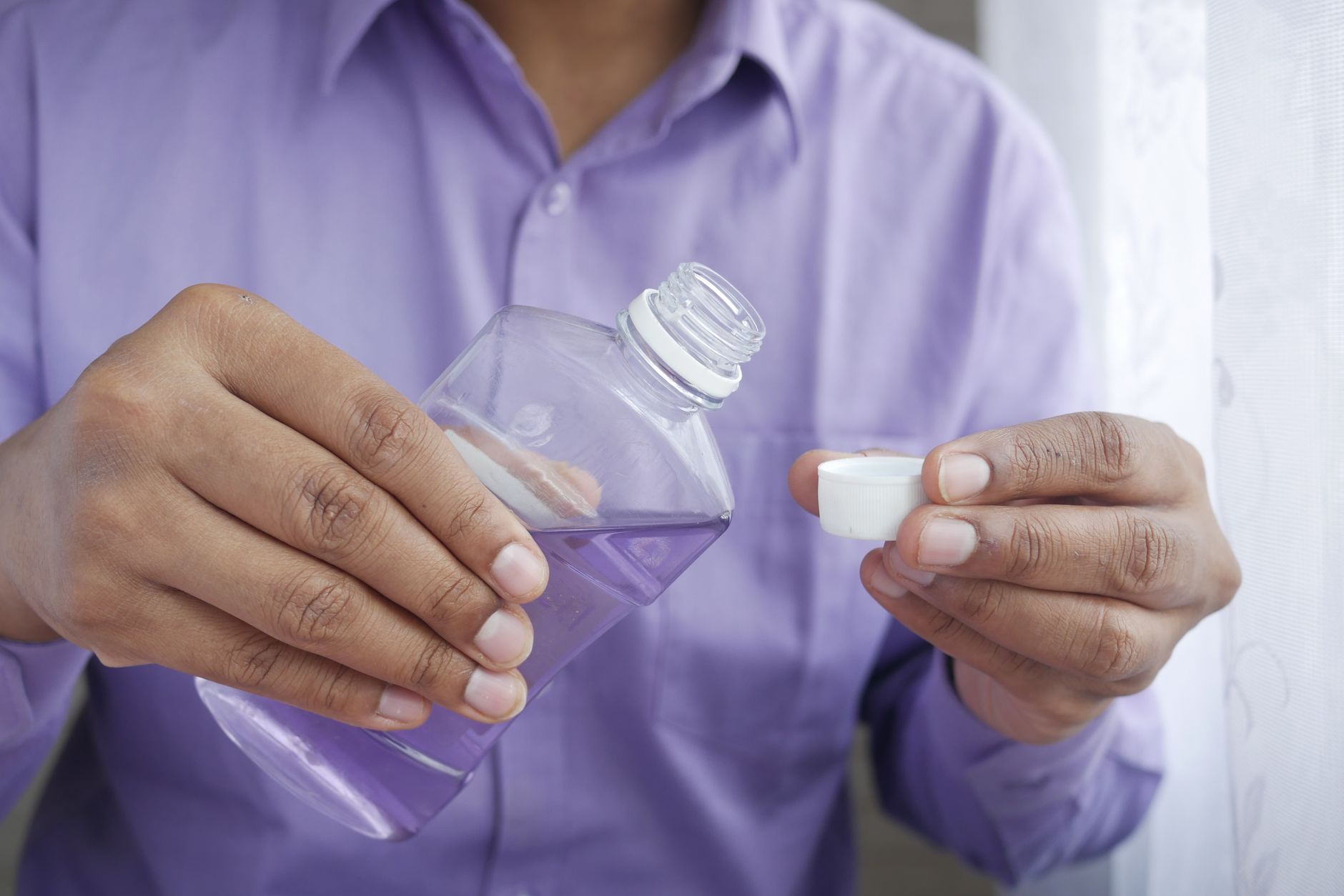
Do You Need Mouthwash? Before or After Brushing, Which Kind
Clinically reviewed by Dr. Abinaash Kaur, DDS, RCDSO, on 2026-11-02. Dr. Kaur is a general dentist in Toronto (Bloor West Village) registered with the Royal College of Dental Surgeons of Ontario.
No, most people don't need mouthwash. Brushing twice a day with fluoride toothpaste and cleaning between your teeth do the real work, and the Canadian Dental Association calls those two habits, along with a regular exam, the most important things you can do for your dental health (CDA).
A rinse is an add-on. The right one depends on what you're trying to fix, and the wrong timing can undo part of the good your toothpaste just did. Here's how I sort it out for patients in Bloor West Village.
Wait? Doesn't the dental association tell you to rinse?
Fair question. The CDA's daily routine does list a once-a-day swish with a "non-alcohol" rinse as one step, after brushing, flossing and cleaning your tongue (CDA). It's the fourth item on the list, not the first.
The Canadian Dental Hygienists Association puts it more precisely. Its position statement encourages over-the-counter rinses "as an adjunct" to brushing and flossing, "particularly for clients who are unable to control plaque accumulations and/or show signs of gingivitis" (CDHA position paper).
So the honest answer has two parts. Necessary? No. Useful for some people, for a specific reason? Yes, and the rest of this post is about who those people are.
Should you rinse right after brushing?
Not with water, and not with most mouthwash either. Spit out the extra toothpaste and leave the rest where it is.
Here's what gives. Fluoride toothpaste works partly by leaving a thin film of fluoride on your teeth after you brush. Rinse hard with water and a lot of it goes down the drain. The CDA's routine says it plainly: "Do not rinse immediately - just spit out excess toothpaste" (CDA). The Public Health Agency of Canada gives parents the same instruction for kids, so the fluoride in the toothpaste "continues to protect the teeth" (Government of Canada).
How strong is the evidence behind that? Moderate, and I'd rather tell you so than oversell it. A group of decay researchers reviewed the studies in 2012 and found "a lack of high-quality evidence to support definitive guidance", while noting that international guidelines give consistent advice anyway (Pitts et al., British Dental Journal, PubMed).
The strongest hint comes from a 3-year trial of 3,005 Scottish schoolchildren, where the kids who rinsed with a beaker of water after brushing had "consistently higher" cavity increases than the kids who didn't (Chesters et al., PubMed).
Spit, don't rinse.
It costs nothing, and there's no downside. What about mouthwash right after brushing? If it's a fluoride rinse, Canada's label rules say to use it after brushing with toothpaste, then not to eat, drink or rinse with water for 30 minutes (Health Canada, Oral Health Products Monograph). If it's an antibacterial rinse with no fluoride in it, my practical read is to use it at a different time of day, after lunch for example, so you aren't washing fresh toothpaste off your teeth with something that can't replace it.
Who gets something out of a fluoride rinse?
People at higher risk of cavities. That's Health Canada's wording, not mine: fluoride rinses "prevent tooth decay in people who are at risk for the disease", and you should talk to your dental professional before starting one (Health Canada).
The evidence here is solid, at least for kids and teens. A Cochrane review pooled 37 trials with 15,813 children and adolescents and found that supervised, regular fluoride rinsing cut the increase in decayed, missing and filled permanent tooth surfaces by 27% compared with a placebo or no rinse (Cochrane, PubMed). Nearly all of those trials were school programs with an adult watching, so the authors say the size of the effect at home is less clear.
Who do I put in the "worth it" group?
- Anyone who keeps getting new cavities, even with decent brushing. Our post on whether a cavity can heal itself explains what fluoride can and can't reverse.
- Dry mouth, from medication or anything else. Less saliva means less natural repair, and the rinse should be alcohol-free, which is the kind the CDA lists in its own dry-mouth tips (CDA factsheet).
- Braces. Here the evidence is thinner than you'd expect. A Cochrane review of fluoride during fixed-brace treatment found only low-certainty evidence for any product, and the one trial that tested a 250 ppm fluoride rinse against a placebo rinse found no evidence of a difference (Cochrane, PubMed). The signals that did show up were for a high-fluoride prescription toothpaste and for fluoride foam applied in the office. A rinse is reasonable with braces; it isn't the proven piece.
Do antibacterial rinses help bleeding gums?
A little, on top of brushing and flossing. Not instead of them.
Most people think a mouthwash that "kills germs" is doing the heavy lifting. Here's what happens instead: the brush and the floss remove plaque, and the rinse mops up some of what they left behind.
The two active ingredients with the most research are essential oils (thymol, eucalyptol and menthol) and cetylpyridinium chloride. The CDHA's review found that fixed-combination essential-oil rinses showed reductions in plaque and gum inflammation "beyond that accomplished with mechanical means alone" in studies of six months or longer, while the research on cetylpyridinium chloride was "less conclusive" (CDHA).
A 2015 analysis that pooled 29 six-month trials put the essential-oil benefit at a 16% lower whole-mouth gingivitis score and about 28% less plaque than brushing and flossing alone (JADA, PubMed). Worth knowing: every trial in that analysis was industry-sponsored.
Cetylpyridinium chloride has caught up somewhat. A 2021 review of eight trials found it lowered plaque and gum inflammation between the teeth compared with a placebo rinse, though the studies varied a lot from one another (Clinical Oral Investigations, PubMed). In Canada, rinses with this ingredient are licensed to claim they help prevent or reduce plaque and gingivitis, and their labels can carry a caution about temporary surface staining (Health Canada monograph).
How do you know a bottle's claim is real? Look for the CDA Seal. It means the manufacturer's specific claim was independently reviewed and is "supported by scientific evidence" (CDA Seal Program).
One caution from about 25 years in the chair. If your gums bleed every time you brush, a rinse isn't the fix. Bleeding is a sign, and our post on bleeding gums and gum disease explains what it's usually telling you. Give careful brushing and flossing a couple of weeks, and if the bleeding hasn't settled, book an exam.
What about chlorhexidine, the prescription rinse?
Chlorhexidine is the strongest antibacterial rinse we have, and it's prescribed for specific, short-term situations, not for daily life.
A Cochrane review of 51 trials found high-quality evidence that chlorhexidine, added to brushing, produces a large drop in plaque over 4 to 6 weeks. The gingivitis improvement in people with mild inflammation was real but, in the authors' words, "not considered to be clinically relevant" (Cochrane, PubMed). The same review found that rinsing with it for 4 weeks or longer causes staining on the teeth, and the trials also reported taste changes and sore spots in the mouth.
So when do dentists prescribe it? Situations where someone can't brush normally for a while, or where plaque needs to come down fast for a short stretch. The dentist who prescribes it sets the dose and the length, and the length is short.
Alcohol or alcohol-free?
Alcohol-free, for almost everyone, and the reason isn't what you think.
Most people assume the alcohol is what kills the bacteria. It isn't. McGill's Office for Science and Society points out that the alcohol in mouthwash runs up to 25%, a concentration "too low to kill microorganisms", and that it's there as a carrier for flavour ingredients and as a preservative (McGill OSS). The same note explains that alcohol dries the mouth, which can make bad breath worse rather than better.
The CDA's own routine specifies a "non-alcohol" rinse (CDA). Did you know about this? Most of my patients don't, and for anyone with a dry mouth it's the only kind to consider.
The one wrinkle is strength. The CDHA's review, written in 2006, noted that switching to an alcohol-free version of a rinse may bring "a marked reduction in product efficacy" (CDHA). Formulas have changed since then, and the CDA Seal list shows which alcohol-free products have had their claims checked.
Does alcohol mouthwash cause mouth cancer? The studies conflict, so you get both. A 2012 analysis that pooled 18 studies found no statistically significant link between mouthwash use and oral cancer, including rinses containing alcohol (Gandini et al., PubMed). A 2016 analysis that pooled 12 studies with 8,981 head and neck cancer cases found no overall increase for people who had ever used mouthwash, but higher odds in people who rinsed more than once a day or for more than 35 years, and the authors noted their limited ability to separate the rinse from tobacco and alcohol use (Boffetta et al., PubMed). The 2016 authors also disclosed that the 2012 analysis was prepared under a manufacturer contract. My read: there's no good reason to pick an alcohol rinse, and a few small reasons not to.
Is mouthwash safe for kids?
Not under six. Health Canada's word is "never": fluoride rinses contain very high levels of fluoride, and young children are more likely to swallow them (Health Canada). The Ontario Dental Association says rinses in general are "not generally recommended for children under six years of age" (ODA).
Between 6 and 12, it's about supervision. In Canada, a rinse licensed for children must carry directions to instruct children under 12 in good rinsing habits "to minimize swallowing", and a fluoride rinse with enough fluoride in the bottle must warn that it "contains enough fluoride to seriously harm a child" (Health Canada monograph). That warning is about the bottle, not the capful. Keep it out of reach and watch the first few tries.
For a school-age kid with a cavity history, a fluoride rinse is one of the better-proven tools, as the Cochrane numbers above show. Ask us at the checkup whether your child is in that group. Plenty aren't.
Can mouthwash replace flossing?
No. Have no fear, I'm not going to lecture, but the bottle agrees with me on this one.
The ODA states it flat out: "Oral rinses are not a substitute for brushing and flossing your teeth" (ODA). Health Canada's label rules let a cetylpyridinium chloride rinse say "This product is not intended to replace brushing or flossing" (Health Canada monograph). A liquid swishes past plaque. Floss scrapes it off.
Those are different jobs.
If string floss and you don't get along, that's fine. Our floss or toss post goes through the options, and water flossers vs string floss covers the one most people ask about. A rinse goes on top of whichever you pick, not in place of it.
Bad breath is the other job people hand to mouthwash. A plain minty rinse covers the smell for a while, but as McGill's science office puts it, it "will mask bad odour but will not get rid of the bacteria producing it" (McGill OSS). Our post on bad breath causes and remedies explains the tongue-cleaning step that does more.
So what do I tell a patient who asks?
Some days in Bloor West Village I get the mouthwash question a few times before lunch, usually from someone holding up a phone with a product page open. My answer is the same each time.
Try this: brush twice a day with fluoride toothpaste, spit, and don't rinse. Clean between your teeth once a day. If your checkups keep turning up new decay, or your mouth is dry, add an alcohol-free fluoride rinse at a separate time from brushing. If your gums are puffy even though you're brushing well, an alcohol-free rinse with a CDA Seal for plaque and gingivitis can help on top.
If none of that applies to you, the mouthwash shelf can stay at the store.
Frequently Asked Questions
Q: Is mouthwash necessary every day? No. Brushing with fluoride toothpaste and cleaning between your teeth are the essentials. The Canadian Dental Hygienists Association describes rinses as "an adjunct" to those steps, mainly for people who struggle to control plaque or have signs of gingivitis (CDHA).
Q: Should you use mouthwash before or after brushing? Spit out your toothpaste and don't rinse with water. A fluoride rinse goes after brushing, with nothing to eat or drink for 30 minutes, under Canadian label rules (Health Canada monograph). A non-fluoride antibacterial rinse is better at a separate time of day, so it doesn't wash the toothpaste's fluoride away.
Q: Does mouthwash work for bad breath? A plain cosmetic rinse masks odour without removing the bacteria that cause it, and alcohol in the rinse can dry your mouth and make breath worse (McGill OSS). Cleaning your tongue does more.
Q: Is alcohol-free mouthwash as good as the alcohol kind? The alcohol isn't the active ingredient; at mouthwash concentrations it's too weak to kill bacteria (McGill OSS). Look at the active ingredient and for a CDA Seal instead, and choose alcohol-free if your mouth is dry (CDA).
Q: Can kids use mouthwash? Never give a fluoride rinse to a child under 6, because young children are more likely to swallow it (Health Canada). For children 6 to 12, supervise and teach them to spit it out.
Q: Is prescription chlorhexidine rinse better than store-bought? It's stronger on plaque, and a Cochrane review found high-quality evidence for a large plaque reduction, but rinsing for 4 weeks or longer stains teeth and can alter taste (Cochrane, PubMed). It's prescribed for specific short-term situations, not daily use.
Reviewed by Dr. Abinaash Kaur, B.Sc., DDS (University of Toronto Faculty of Dentistry), who has practised general and family dentistry in Bloor West Village for about 25 years. This article is general oral health information, not a diagnosis, medical advice, or a substitute for an examination.
Not sure whether a rinse belongs in your routine, or which kind? We're at 750 Annette Street in Bloor West Village, serving the Junction, High Park, and Baby Point. Book an exam with The Village Dentist and we'll look at your decay risk and your gums and tell you plainly whether it's worth the shelf space.
