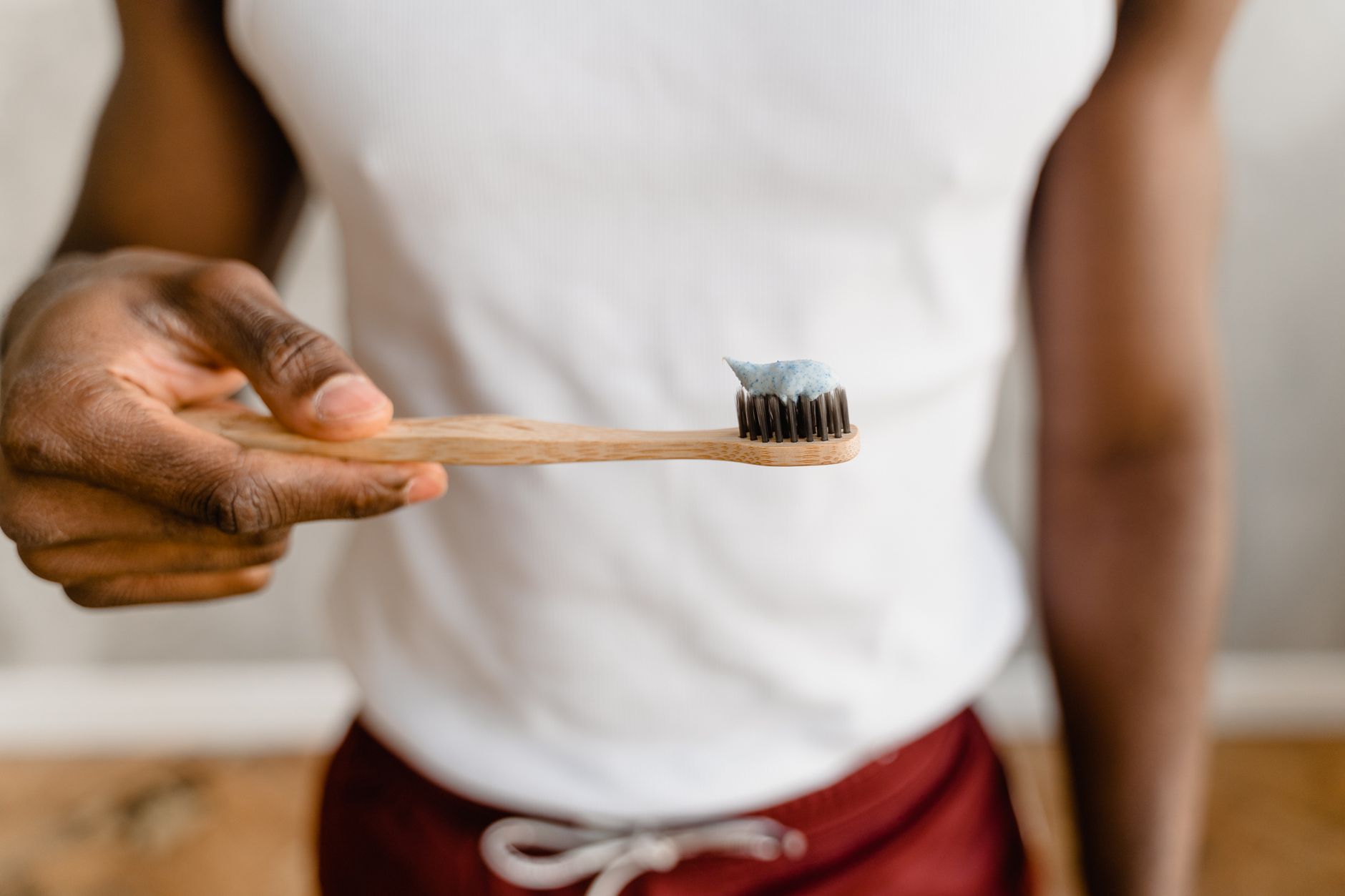
Hydroxyapatite vs Fluoride Toothpaste: What the Science Says
Clinically reviewed by Dr. Abinaash Kaur, DDS, RCDSO, on 2026-09-14. Dr. Kaur is a general dentist in Toronto (Bloor West Village) registered with the Royal College of Dental Surgeons of Ontario.
If you want the strongest protection against cavities, fluoride is still the answer. Hydroxyapatite is a legitimate ingredient with real trials behind it, and it's a sensible second choice if you won't use fluoride, but the evidence isn't equal yet.
Patients bring me the tube. Sometimes it's a photo of the tube, taken in the aisle at the pharmacy, with a text asking if it's a scam. It isn't a scam. The marketing around it is running well ahead of the research, though, and the gap between those two things is where I want to spend this post.
I've been practising in Bloor West Village for about 25 years. Fluoride-free toothpaste used to mean a herbal paste with no active ingredient at all. That's changed. Hydroxyapatite pastes contain something that does a job, so the question deserves a real answer rather than an eye-roll.
What is hydroxyapatite, and what does it do?
Hydroxyapatite is a calcium phosphate mineral. It's the same material your tooth enamel is mostly made of, which is why it turns up in toothpaste at all.
The mechanism is straightforward. Tiny particles of the mineral settle onto the tooth surface and into microscopic pits, adding mineral back to spots where acid has stripped it away. Your enamel loses and regains mineral all day long, and anything that tips that balance toward regaining it helps. Our post on whether a cavity can heal itself walks through that back-and-forth in more detail.
Fluoride works differently. It gets built into the enamel crystal itself, making the surface harder for acid to dissolve, and it interferes with the bacteria that produce the acid. Health Canada puts it plainly: fluoride has been scientifically proven to strengthen tooth enamel, lower the amount of acid in your mouth, and rebuild minerals that make teeth stronger (Health Canada).
Two different routes to the same goal. So how do they compare when you put them on actual teeth?
Does hydroxyapatite prevent cavities?
Here's where most articles stop reading and start selling. There are three clinical trials people point to, and they're worth knowing in detail.
The first ran in children aged 3 to 7 for 336 days. Caries increased in 72.7% of the hydroxyapatite group and 74.2% of the fluoride group (PMC, early childhood caries trial). The fluoride comparison paste contained 500 ppm fluoride (PMC).
The second followed 11 to 25 year-olds in braces for 168 days. New lesions appeared in 54.7% of the hydroxyapatite group and 60.9% of the fluoride group, with the test paste at 10% microcrystalline hydroxyapatite against a control at 1400 ppm fluoride (PMC, orthodontic trial).
The third followed adults for 18 months. No increase in decayed, missing or filled surfaces was seen in 89.3% of the hydroxyapatite group and 87.4% of the fluoride group, against a control containing 1,450 ppm fluoride (PMC, 18-month adult trial).
Read quickly, those numbers look like a tie. Read carefully, two things jump out.
The part the marketing leaves out
Most people think "non-inferior" means "just as good." Here's what it means in these studies.
A non-inferiority trial doesn't ask whether two products perform the same. It asks whether the new one is worse by less than a pre-set amount. In the children's trial that amount, the margin, was 20 percentage points (PMC). The orthodontic trial used the same 20% margin (PMC). Hydroxyapatite cleared that bar comfortably in both. Clearing a 20-point bar is a different claim from matching fluoride, and the tube doesn't explain the difference.
The second thing is funding. The children's trial was funded by Dr. Kurt Wolff GmbH & Co. KG (PMC). The orthodontic trial was funded exclusively by the same company (PMC). So was the adult trial, which also lists three of its authors as employees of that company (PMC). That company makes the hydroxyapatite toothpaste being tested.
Industry funding doesn't make a study wrong. Plenty of good dentistry research is paid for by the companies that make the product. It does mean the whole headline case for hydroxyapatite currently rests on trials with one sponsor, and independent replication hasn't caught up.
The reviewers noticed. A 2022 meta-analysis of nano-hydroxyapatite included 10 trials and rated 7 of them at high risk of bias, with the level of evidence graded as very low (PMC, nano-hydroxyapatite meta-analysis). Its authors wrote that the low number of clinical studies, the short follow-up periods, the high risks of bias and the limiting grade of evidence "do not allow for conclusive evidence on the efficacy of nHA" (PMC).
A more recent 2025 systematic review is friendlier. It found no significant difference between hydroxyapatite and fluoride toothpastes, with a risk ratio of 0.98 (PubMed, 2025 systematic review). Note what it was built from: 68 studies were retrieved, and 4 were eligible (PubMed). Four studies is a thin base for a decision you make twice a day for the rest of your life.
What fluoride has that hydroxyapatite doesn't
Are you wondering why dentists sound so stubborn about this? It's the size of the evidence pile, not loyalty to an ingredient.
Fluoride has been used to prevent tooth decay in Canada since the 1940s (Health Canada). The Cochrane review of fluoride toothpaste concentrations found high-certainty evidence that 1,000 to 1,250 ppm fluoride toothpaste reduces caries increments compared with non-fluoride toothpaste (Cochrane via PMC). High certainty is the top of the grading scale. It's the language reviewers use when more research is unlikely to change the answer.
That same review found moderate-certainty evidence that 1,450 to 1,500 ppm slightly reduces caries increments compared with 1,000 to 1,250 ppm (Cochrane via PMC). Concentration matters, which is one reason I ask what's in the tube rather than what's on the front of the box.
The Canadian Dental Association's position is unchanged. Fluoride makes teeth more resistant to decay, and it can prevent or even reverse tooth decay that has started (Canadian Dental Association). Health Canada's own list of fluoride sources for preventing decay covers toothpaste, water, varnish, mouth rinses, gels and supplements (Health Canada). Hydroxyapatite doesn't appear on it.
Is fluoride safe? The question underneath the question
Most people shopping for hydroxyapatite aren't chasing better remineralization. They're avoiding fluoride, and they deserve a straight answer instead of a sigh.
Apart from dental and skeletal fluorosis, there are no other health risks that have been proven to be related to fluoride (Health Canada). Skeletal fluorosis is extremely rare in Canada (Health Canada).
Dental fluorosis is the one worth understanding. It's a change in how enamel looks, small white lines or flecks on the adult teeth, and it can only happen if a young child swallowed too much fluoride while those permanent teeth were still forming under the gums (Health Canada). You can't get dental fluorosis after your adult teeth have grown in (Health Canada).
The Canadian numbers: in the Canadian Health Measures Survey, 59.8% of children had teeth classified as normal and 23.5% questionable, 16% had very mild or mild fluorosis, and fewer than 0.3% had moderate or severe fluorosis (Health Canada). The CDA reads the same survey and says fluorosis is not an issue of concern for the vast majority of children, with the mild forms often going unnoticed by children and parents alike (Canadian Dental Association).
If you're an adult, that risk window closed years ago. If you're a parent, the amount is what matters, not whether fluoride touches the brush. For children under 3 at risk of decay, an adult should brush with a rice-grain amount, and for ages 3 to 6, a small green pea, 5 mm at most, with an adult helping (Health Canada). Our guide to fluoride in Toronto's water goes through the parent side of this properly.
Where hydroxyapatite genuinely earns its place
Have no fear, I'm not about to tell you the tube in your cabinet is worthless. There are three situations where I'm glad it exists.
Sensitive teeth. This is its strongest card. A meta-analysis of six randomized trials with 4 weeks of follow-up found nano-hydroxyapatite produced the most significant desensitizing effect among the treatments compared, with high quality of evidence for the pooled result (PubMed, sensitivity meta-analysis). The same authors note that long-term trials are still needed before firm recommendations (PubMed). If cold water makes you flinch, it's a fair thing to try, and our post on what causes tooth sensitivity covers the other causes worth ruling out first.
People who won't use fluoride. Some patients have decided, and no amount of evidence is going to move them. A hydroxyapatite paste with a decent trial record beats a fluoride-free herbal paste with none, and it beats brushing with nothing because you're annoyed at your dentist. That's a real choice I'd rather they make than the alternative.
Combination pastes. Products containing both are on shelves now. You get the ingredient with the strongest evidence plus the one that may add mineral back to the surface. If you like the idea of hydroxyapatite, this is the version I'd point you toward. Readers who like the natural end of the aisle may also want our honest look at natural dental care.
How to read the tube
Try this: turn the box over before you turn it around.
Look for the fluoride concentration in ppm. For adults and older children, 1,000 to 1,500 ppm is the range the evidence supports (Cochrane via PMC). Anything under 1,000 ppm has weaker support for cavity prevention (Cochrane via PMC).
If you're buying hydroxyapatite, look for the percentage. The trials above used 10% microcrystalline hydroxyapatite (PMC). A paste that lists it near the bottom of the ingredients at some unstated trace level isn't the thing that was studied.
Hydroxyapatite isn't the only active being sold as a fluoride alternative either. If the tube in your hand lists arginine instead, that one has its own pair of trials worth knowing about.
Then remember that the paste is the smallest variable here. Technique, frequency and what you snack on move the needle more, which is why our toothbrush guide spends more time on how you brush than on what you brush with. How often we see you matters too, and the right cleaning interval is a per-person answer.
What I tell people in the chair
Some days the schedule pushes me, and this is still a conversation I make time for, because the person asking has usually read six conflicting things before breakfast.
If your teeth are healthy, you've had few cavities, and hydroxyapatite is what gets you brushing twice a day, I'm not going to fight you on it. If you're getting cavities, if you're in braces, if your gums have receded and roots are exposed, or if you have a dry mouth from medication, I'll ask you to use fluoride. Those mouths need the ingredient with the deepest evidence behind it, not the promising one.
The honest summary is that hydroxyapatite might get there. It hasn't yet.
Frequently Asked Questions
Q: Is hydroxyapatite toothpaste as good as fluoride? Not proven equal, no. Three clinical trials found hydroxyapatite non-inferior to fluoride, which means worse by less than a pre-set margin rather than equivalent, and that margin was 20 percentage points (PMC). All three were funded by the manufacturer of the tested toothpaste (PMC). A 2022 meta-analysis graded the overall level of evidence as very low (PMC).
Q: Does hydroxyapatite toothpaste prevent cavities? There's evidence it helps, and it isn't yet strong enough to call settled. A 2025 systematic review found no significant difference against fluoride toothpaste, with a risk ratio of 0.98, though only 4 studies out of 68 retrieved were eligible (PubMed). Fluoride at 1,000 to 1,250 ppm has high-certainty evidence for reducing cavities (Cochrane via PMC).
Q: Is fluoride toothpaste safe for my kids? Yes, in the right amount. Health Canada advises a rice-grain amount for children under 3 who are at risk of decay, brushed by an adult, and a small green pea, 5 mm at most, for ages 3 to 6 with adult help (Health Canada). Young children swallow toothpaste, which is why supervision matters more than the brand (Canadian Dental Association).
Q: Will fluoride give my child white spots on their teeth? Only from swallowing too much while the adult teeth are forming under the gums, and you can't develop dental fluorosis after those teeth have come in (Health Canada). In the Canadian Health Measures Survey, fewer than 0.3% of children had moderate or severe fluorosis, and the CDA describes the mild forms as often unnoticed (Health Canada, Canadian Dental Association).
Q: Is hydroxyapatite good for sensitive teeth? This is where it performs best. A meta-analysis of six randomized trials found nano-hydroxyapatite gave the most significant desensitizing effect of the treatments compared, with high quality of evidence for the pooled result, while noting that long-term trials are still needed (PubMed). Persistent sensitivity should still be looked at, because a cracked tooth or exposed root needs a different fix.
Q: Can I use both hydroxyapatite and fluoride? Yes, and pastes combining the two are sold in Canada. You keep the ingredient with high-certainty evidence for cavity prevention (Cochrane via PMC) alongside the mineral that may help rebuild the surface. Alternating a fluoride paste in the morning with a hydroxyapatite paste at night is another workable pattern.
Reviewed by Dr. Abinaash Kaur, B.Sc., DDS (University of Toronto Faculty of Dentistry), who has practised general and family dentistry in Bloor West Village for about 25 years. This article is general information about oral care products, not a diagnosis or a substitute for an examination.
Not sure which tube belongs in your bathroom? Bring it in and we'll look at your teeth first, then answer it for your mouth rather than in general. We're at 750 Annette Street in Bloor West Village, serving the Junction, High Park, and Baby Point. Book a check-up with The Village Dentist and we'll tell you straight whether your current routine is holding up.
