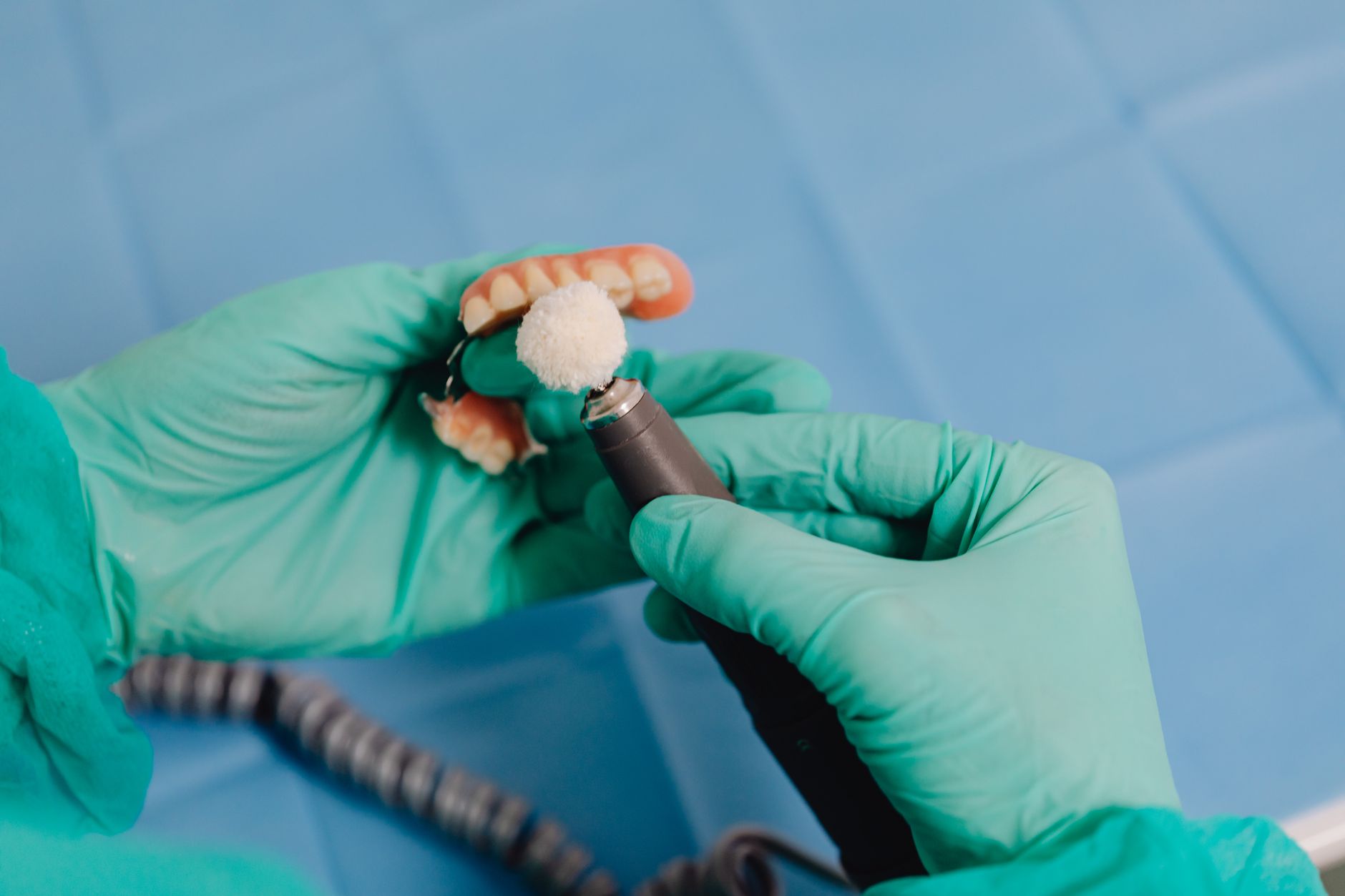
Partial Dentures in Ontario: Cost, Comfort and Sore Spots
Clinically reviewed by Dr. Abinaash Kaur, DDS, RCDSO, on 2026-10-19. Dr. Kaur is a general dentist in Toronto (Bloor West Village) registered with the Royal College of Dental Surgeons of Ontario.
In Toronto, a removable partial denture usually costs about $1,000 to $2,000 per arch for an all-plastic (acrylic) one, and about $2,000 to $3,500 for one built on a thin metal frame. That's a ballpark from my office, not a quote, and most people get comfortable wearing a partial within a few weeks.
The cost is only half of what people ask me. The other half comes a week after they get it: why do I lisp, why does this one spot hurt, and why are my gums red under it?
This post covers both. If your question is mainly what the Canadian Dental Care Plan pays for, we've written a separate guide on whether the CDCP covers dentures, so I'll keep the coverage part short here.
What is a partial denture, exactly?
A partial denture is one or more false teeth on a base that clips onto your remaining natural teeth. The Canadian Dental Association describes it as artificial teeth "held in place by clasps that fit onto nearby natural teeth," and you take it out yourself for cleaning and at night (Canadian Dental Association).
Dentists usually suggest one when the teeth beside a gap aren't strong enough to hold a bridge, or when more than a few teeth are missing (Canadian Dental Association).
There are three common builds. An acrylic partial is all pink plastic and tooth-coloured plastic, often with small wire clasps. A cast partial has a thin metal framework under the plastic, so it's slimmer and sturdier. A flexible partial uses a bendy nylon-type base with gum-coloured clasps instead of metal ones.
How much does a partial denture cost in Ontario?
Here are the ranges I see across Toronto offices in 2026. Treat them as a ballpark, not a set price.
| Type of partial (one arch) | Typical Toronto range |
|---|---|
| Acrylic (all plastic) | $1,000 to $2,000 |
| Flexible base | $1,200 to $2,500 |
| Cast metal framework | $2,000 to $3,500 |
| Reline of an existing partial | $300 to $700 |
Canada Life puts the national picture plainly: the average cost of dentures "can range from a few hundred dollars to several thousand dollars," and lab fees and X-rays are often extra (Canada Life).
The same page notes many dentists base prices on their provincial association's fee guide, and if your dentist charges more than that guide, you may pay more out of pocket (Canada Life).
In Ontario, that guide is the Ontario Dental Association's suggested fee guide. The regulator, the Royal College of Dental Surgeons of Ontario, says dentists "must tell patients if they intend to charge fees that are above the fees listed in the guide" (RCDSO). Estimates should include lab fees at cost, and a dentist may give you a range with a low and a high end (RCDSO).
Try this: ask for a written estimate with the lab fee shown on its own line. If you have workplace insurance, dentures usually fall under "major dental coverage" (Canada Life), so send that estimate to your insurer before you start.
What does the CDCP pay for, and when won't it?
The Canadian Dental Care Plan covers partial dentures, but they need preauthorization, which means the plan approves them before the work starts (Government of Canada).
A few rules in the plan's benefits guide surprise people (Government of Canada):
- An acrylic partial is covered once in any 5 years per arch, and a cast partial once in any 8 years per arch (Government of Canada).
- All basic treatment, like controlling cavities and gum disease, has to be finished first.
- You need at least one missing front tooth, or at least two missing back teeth on the same side of the same jaw, not counting the second and third molars.
- The plan's fee includes 3 months of follow-up care after the denture goes in, and relines are covered once in any 2 years per arch (Government of Canada).
The guide also lists partial dentures held by implants as an exclusion (Government of Canada). The full walk-through lives in our CDCP dentures guide.
What does getting used to a partial feel like?
Strange, for a little while. Pretty much everyone says it feels too big at first.
The NHS puts the adjustment period at a few weeks, and suggests practising taking the denture in and out and eating softer foods until you're comfortable with your regular diet (NHS). The CDA says complete dentures can cause soreness at first and take some time to get used to (Canadian Dental Association), and in my experience partials follow the same pattern.
Here's the order I suggest for eating:
- First few days: soft foods cut small, like eggs, pasta, fish and cooked vegetables.
- Next: chew on both sides at once, so the partial doesn't tip.
- Later: firmer foods. Bite into a whole apple or a crusty roll last, because biting with your front teeth tends to lift a partial.
Have no fear if the first week feels clumsy. In 25 years of practice in Bloor West Village, I've seen almost everyone settle in.
Is a sore spot normal, and when does it mean a reline?
Most people think a sore spot means the denture is wrong. Here's what's usually going on: one small area of the base presses a little harder than the rest.
That kind of spot is common in the first weeks. It's a quick fix: we find the pressure point and smooth that one area of the base. Please don't sand it yourself at home. It's easy to take off too much, and then the denture rocks.
A reline is a different job. A reline adds new material to the fitting side of the base so it matches your gums again.
Your mouth keeps changing, and the CDA says dentures "will need adjusting or relining from time to time to make sure they fit well" (Canadian Dental Association). The Ontario Dental Association says the same thing: gums and bone change with time, and your dentist can adjust the denture so it still fits (Ontario Dental Association).
So how do you tell them apart?
- Adjustment: one sore spot, early on, in a denture that otherwise feels snug.
- Reline: a denture that used to fit and now slips, rocks, or traps food underneath, usually months or years in.
There's one more reason not to live with a sore spot. The CDA warns that poorly fitted dentures may cause denture sores that make oral cancer more difficult to spot (Canadian Dental Association). A sore that keeps coming back in the same place should be looked at.
Red, irritated gums under the partial: what gives?
Often it's a condition called denture stomatitis (red, inflamed gum under a denture, usually linked to yeast).
The College of Dental Hygienists of Ontario describes it as redness limited to the gum covered by a full or partial denture, most common on the roof of the mouth and the gum ridge (College of Dental Hygienists of Ontario). Here's the surprise. The same fact sheet says it "is usually asymptomatic and often discovered by the dental hygienist or dentist during a routine examination" (College of Dental Hygienists of Ontario).
So it often doesn't hurt.
It's common, too. A 2024 systematic review put its worldwide prevalence among people wearing complete and partial dentures in the range of 20 to 67%, and named continuous denture wear, yeast build-up on the denture, and poor cleaning among the main causes (J Fungi via PubMed).
An interdisciplinary review pointed to poor denture hygiene and full-time, mainly night-time wear (Journal of Prosthodontics via PubMed). Unclean or poorly fitting dentures raise the risk (College of Dental Hygienists of Ontario).
What helps? The interdisciplinary review says long-term treatment relies on daily cleaning of the denture and "removal of dentures at night, every night" (Journal of Prosthodontics via PubMed). The Journal of the Canadian Dental Association gives the same advice: clean the denture and avoid wearing it overnight (JCDA).
If the redness is there, your dentist may prescribe an antifungal medication, and may ask you to leave the partial out for a stretch while it works (College of Dental Hygienists of Ontario). That's a prescription decision made after an exam, not something to start on your own.
The interdisciplinary review also notes antifungals offer limited benefit outside short-term use, which is why the cleaning and the nights off matter more (Journal of Prosthodontics via PubMed).
How should you clean a partial?
Wait? Is there a right way to clean a denture? Yes, and toothpaste isn't it.
The CDA's routine is simple (Canadian Dental Association):
- Take it out, rinse off loose food, and brush every surface with a denture brush or soft toothbrush and denture cleaner or mild soap.
- Brush under the clasps, where bacteria collect.
- Skip household cleaners and regular toothpaste, which are too abrasive.
- Leave it out overnight, soaking in warm water. If your partial has metal clasps, use warm water only, because other soaking solutions can tarnish the metal.
- Never use hot water, and keep it wet when it's out so it doesn't dry out or warp.
If breath is the thing bothering you, our post on what causes bad breath covers the rest of the list. The teeth holding the clasps are working hard, and they need brushing and flossing like any other teeth.
Some days the schedule pushes me, and even then I take a minute at a checkup to look under a partial. It's the spot most people never see.
Partial or implant: which one makes sense for you?
There's no single right answer, and I'd rather lay out the trade-offs than pick for you.
A partial is the lower-cost route, it's removable, and it can replace several teeth at once. It also leans on your natural teeth through the clasps, and it needs relines as your mouth changes.
An implant is fixed in the jaw and doesn't rely on neighbouring teeth. It costs more.
Canada Life lists dental implants at around $1,000 to $6,000 per tooth depending on where you live (Canada Life), and we've broken down what implants cost in Toronto in detail. The CDCP doesn't cover implant-held dentures (Government of Canada). If you're weighing a fixed option too, our post on choosing between a bridge and an implant covers the fixed options in detail.
For many people, a well-made partial is a real fix, not a compromise. For others, an implant fits their mouth and budget better.
Has it been years since your last checkup? That's fine. A partial plan starts with an exam anyway, and we've written about coming back to the dentist after a long gap without the lecture.
Frequently Asked Questions
Q: How much does a partial denture cost in Ontario? In Toronto, a removable partial usually runs about $1,000 to $2,000 per arch for acrylic and about $2,000 to $3,500 for a cast metal framework, as a ballpark from my office rather than a quote. Canada Life says denture costs nationally range "from a few hundred dollars to several thousand dollars," with lab fees often extra (Canada Life). Ontario dentists must tell you if they plan to charge above the ODA guide (RCDSO).
Q: Will the CDCP pay for a partial denture to replace one tooth? It depends on which tooth. The plan considers a partial when there's at least one missing front tooth, or at least two missing back teeth on the same side of the same jaw, not counting the second and third molars (Government of Canada). Partials also need preauthorization (Government of Canada).
Q: How long does it take to get used to a partial denture? Usually a few weeks. The NHS suggests practising taking it in and out and eating softer foods until you're comfortable with your regular diet (NHS). Speech tends to settle faster if you read aloud at home.
Q: Should I sleep with my partial denture in? No, unless your dentist has told you otherwise. The CDA says to remove dentures overnight to give your mouth a chance to rest (Canadian Dental Association), and a clinical review links night-time wear to denture stomatitis (Journal of Prosthodontics via PubMed).
Q: Why are my gums red under my partial denture? It's often denture stomatitis, a yeast-linked redness limited to the gum the denture covers, which is usually painless and found at a checkup (College of Dental Hygienists of Ontario). Clean the partial daily, take it out at night, and book an exam. Your dentist may prescribe an antifungal if it's needed.
Reviewed by Dr. Abinaash Kaur, B.Sc., DDS (University of Toronto Faculty of Dentistry), who has practised general and family dentistry in Bloor West Village for about 25 years. This article is general oral health information, not a diagnosis, a quote, or a substitute for an examination.
Missing a tooth or two, or wearing a partial that's started to rub? Come in and we'll check the fit, look at the gums underneath, and give you a written estimate with real numbers on it. We're at 750 Annette Street in Bloor West Village, serving the Junction, High Park, and Baby Point. Book a visit with The Village Dentist.
