Dental Sealants: How Long They Last, Adults, and BPA
Clinically reviewed by Dr. Abinaash Kaur, DDS, RCDSO, on 2026-10-19. Dr. Kaur is a general dentist in Toronto (Bloor West Village) registered with the Royal College of Dental Surgeons of Ontario.
Dental sealants are thin coatings painted into the grooves of back teeth to keep decay-causing bacteria out, and trials show they cut cavities in those grooves for years. Children usually get them as their adult molars come in. Adults can get them too, but the research in adults is limited, so for adults it's decided tooth by tooth.
That's the short answer. A Cochrane review of the trials, all in children and teens aged 5 to 16, found that resin sealants on their adult molars reduced cavities by between 11% and 51% at two years, compared with no sealant (Cochrane review via PubMed).
Three questions usually follow: how long do they last, does my teenager or do I need them, and what about BPA? Here's what the evidence says on each one.
What is a dental sealant, and how does it go on?
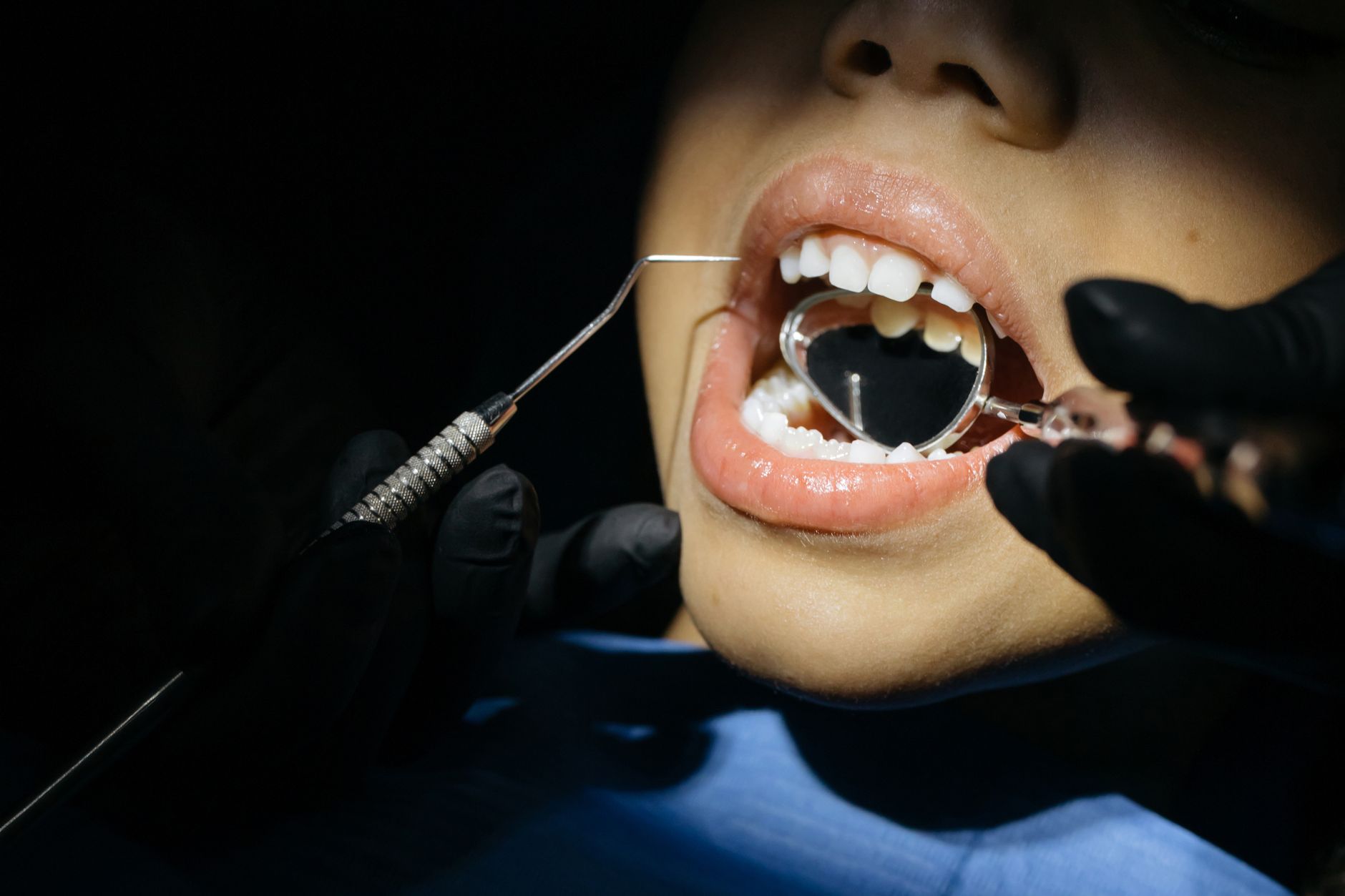
A sealant is a protective coating for the chewing surface of a back tooth. The Ontario Dental Association describes sealants as "a barrier against decay-causing bacteria," usually placed on the chewing surfaces of the back teeth (Ontario Dental Association). Health Canada calls them plastic coverings that help keep those teeth free from decay (Health Canada).
Why the back teeth? Their chewing surfaces are full of deep pits and grooves, and a toothbrush bristle can't always reach the bottom of them. A 2017 review reports that pit and groove decay makes up about 90% of the decay in children's and teens' permanent back teeth (Dentistry Journal review via PubMed).
How does the sealant go on? One NHS patient leaflet describes the steps plainly: the tooth is washed, dried, and a sealant is painted onto the grooves, then set with a light (Leeds Teaching Hospitals NHS Trust). A 2017 review adds the preparation that makes it stick: the tooth has to be kept dry, the surface cleaned, and the enamel etched before a thin bonding layer goes on (Dentistry Journal review via PubMed).
The same review calls keeping the tooth dry the most critical step (Dentistry Journal review via PubMed).
Which teeth get sealed, and at what age?
The first adult (permanent) molars come in at age six or seven, at the back of the mouth behind the last baby teeth, according to the Canadian Dental Association (Canadian Dental Association). They don't replace any baby teeth, so a lot of parents don't notice them arriving. The Ontario Dental Association says that by the age of 13, most of the adult teeth except the wisdom teeth should be in (Ontario Dental Association).
Does every child need every back tooth sealed? No. The Canadian Dental Association supports "the appropriate and selective use of sealants for both primary and permanent teeth," meaning baby teeth and adult teeth, based on the dentist's assessment of cavity risk (Canadian Dental Association position statement).
The same statement treats sealants as one part of a prevention plan that also includes diet advice, fluoride, good brushing and flossing, and regular exams.
Canada's Drug Agency looked at the guidelines and found three that recommend sealants for children and teens, either when the molars come in or to stop early decay that hasn't yet formed a hole (Canada's Drug Agency). It also noted that Canada still needs its own rigorous sealant guidelines.
Our back-to-school check-up guide covers where sealants fit in a child's yearly visit, and the first tooth to first visit guide covers the years before the first molars arrive.
How well do sealants work?
Pretty well, for children's molars. A Cochrane review pooled 38 trials with 7,924 children aged 5 to 16 (Cochrane review via PubMed). It found moderate-quality evidence that resin sealants on the adult molars of those children and teens reduced cavities by between 11% and 51% compared with no sealant at 24 months, with similar benefit up to 48 months.
The same review gives a worked example. If 16% of unsealed chewing surfaces decayed over two years, sealing would bring that down to 5.2% (Cochrane review via PubMed). Only four trials looked for side effects, and none reported any.
The benefit also holds over the long run. A review done for the American Dental Association and the American Academy of Pediatric Dentistry found that sealed molars had a reduced risk of decay compared with unsealed ones after seven or more years, with an odds ratio of 0.15 (JADA review via PubMed). It also found sealants did better than fluoride varnish, though that comparison rested on low-quality evidence.
Fluoride isn't the rival here. It's the partner. Sealants protect the grooves, and fluoride strengthens the smooth sides of the tooth that sealants don't cover. Our post on fluoride and Toronto's water explains that side of it.
How many Canadian kids have them? In the national survey run from 2007 to 2009, 32% of children aged 6 to 11 had one or more sealants, and 51% of teens aged 12 to 19 did (Health Canada). The same survey found 57% of 6 to 11 year olds had or had had a cavity. Those figures are from 2007 to 2009, so treat them as a snapshot, not today's picture.
How long do sealants last, and what happens when one chips?
Most people think a sealant is forever. Here's what happens.
Sealants wear down. A 2017 review reports that between five and ten percent of sealants on adult molars are lost each year (Dentistry Journal review via PubMed). That's why it calls regular maintenance essential.
The checking makes a big difference. In one study of more than 8,000 sealants, 85% were still doing their job after eight to ten years, thanks to an annual check-and-repair routine (Dentistry Journal review via PubMed). Only 41% were fully intact at ten years without any resealing. A 1989 review found the same pattern after a single application: complete retention fell from 92% at one year to 66% at seven years (Journal of Public Health Dentistry via PubMed).
What gives with a chipped one? A partly lost sealant can leave sharp edges that trap food and eventually lead to decay (Dentistry Journal review via PubMed). Another review says regular check-ups are needed to catch decay starting under a sealant that leaks (Dentistry Journal review via PubMed).
The fix is regular checking. The 2017 review says recall and repair, when needed, are important to get the most out of a sealant (Dentistry Journal review via PubMed).
The second review explains why: a sealant only protects while its barrier stays intact, so regular checks are essential (Dentistry Journal review via PubMed). The NHS leaflet says sealants should be checked at a child's regular dental visits to make sure they're still present and intact (Leeds Teaching Hospitals NHS Trust).
If a groove has already started to soften, sealing isn't the only option. Our posts on whether a cavity can heal itself and silver diamine fluoride for kids cover what happens at that stage.
Do adults need sealants?
Sometimes. Sealants aren't only for kids, but the evidence in adults is limited. The trials in the Cochrane review above were all in children and teens aged 5 to 16 (Cochrane review via PubMed).
Here's what the evidence says. The Canadian Dental Association's position supports selective use of sealants for both primary and permanent teeth, and the decision rests on a dentist's assessment of cavity risk (Canadian Dental Association position statement). A 2018 review covered the research on sealing and cavity risk for both children and adults, and concluded that sealing shouldn't be limited to teeth that are still coming in (Dentistry Journal review via PubMed).
The 2017 review adds that American dental guidelines support sealing early decay in the grooves, the kind that hasn't broken through into a hole, in children and young adults (Dentistry Journal review via PubMed).
A 1989 review drew a line on group programs: at that time, sealant programs could be justified for children and young adults, but not for older age groups (Journal of Public Health Dentistry via PubMed).
None of these sources is a large trial in adults, so I treat the adult evidence as limited. How I read it for you: an adult isn't ruled in or out by age alone. The question is whether a particular tooth has deep, healthy grooves and a real risk of decay. That's a tooth-by-tooth conversation at an exam, not a blanket rule.
Is there BPA in sealants?
Here's the straight answer: a small amount of BPA can show up in saliva and urine after resin dental work, and the studies differ on how long it lingers.
BPA (bisphenol A) isn't added to sealants as an ingredient. A 2017 review explains that it can form from the breakdown of the resin's building blocks and show up in saliva (Dentistry Journal review via PubMed). The Canadian Dental Association says the amount of BPA from dental sealants has always been tiny and limited to a few specific products, and that the exposure happens in the first few hours or days after placement (Canadian Dental Association).
Why did baby bottles get banned, then? In its 2008 risk assessment, Health Canada found most Canadians had low to very low exposure levels that don't pose a health risk, with a potential concern for infants (Health Canada). The law now bans polycarbonate baby bottles containing BPA. That Health Canada page doesn't mention dental materials at all.
The Canadian Dental Association (CDA) explains why bottles are different: formula is often mixed with boiling water, which makes more BPA leach out, and that kind of heat doesn't happen in the mouth (Canadian Dental Association). The CDA also says no restrictions are planned for dental materials because they're well within safety margins.
What do the measurements show? Each study measured something different, so here's what each one found.
A 2019 systematic review covered resin dental treatment in general, fillings as well as sealants, across seven studies: four in children and three in adults. In every study, BPA in urine rose in the 24 hours after treatment (JDR Clinical and Translational Research via PubMed). Only one of the seven followed people past a month, and it found levels back to baseline by 14 days.
In a small study of 30 adults, BPA in saliva peaked within about three hours of sealant placement and returned to baseline within 24 hours, and none was found in blood (Journal of Dental Hygiene via PubMed).
A study of 67 Thai schoolchildren measured BPA in urine before sealants and for 14 days after. Levels were still rising on day 14, the last day measured, and children with more sealed teeth had higher levels at every visit (JDR Clinical and Translational Research via PubMed). The authors call the exposure minimal and within safe international limits, while noting that the long-term effects are unknown.
The 2019 review also points out that no safety threshold for BPA has been set either way (JDR Clinical and Translational Research via PubMed).
So the honest summary is small and measured, not zero, and not equally brief in every study. I'd rather say that plainly than promise "no BPA at all."
What do sealants cost, and are they covered?
The fee depends on how many teeth are being sealed, so ask the office for an estimate before the appointment. Coverage is where public programs can help, and two of them cover sealants for kids.
The Canadian Dental Care Plan covers sealants for people 17 and under, on unrestored chewing surfaces of adult molars and premolars, and on the tongue side of the upper front teeth (Government of Canada, CDCP guide). There's a lifetime limit of two sealants per eligible tooth, and wisdom teeth aren't eligible. Sealants are listed among the plan's preventive services (Government of Canada, CDCP coverage).
Healthy Smiles Ontario is a free dental program for eligible children and youth 17 and under, and it covers sealants limited to adult molars (Government of Ontario). Our CDCP and Healthy Smiles Ontario comparison lays the two side by side, and the back-to-school CDCP coverage guide covers the other services kids can use.
For adults, neither plan covers sealants past 17 (Government of Canada, CDCP guide). If you have workplace benefits, check your plan booklet or call the insurer before booking.
Frequently Asked Questions
Q: How long do dental sealants last? Years, but not forever. A 2017 review reports that five to ten percent of sealants on adult molars are lost each year, and that with an annual check-and-repair routine, 85% were still doing their job after eight to ten years (Dentistry Journal review via PubMed). That's why they're checked at regular visits.
Q: At what age should kids get sealants? Usually as the adult molars come in. The first molars arrive at age six or seven (Canadian Dental Association), and most of the other adult teeth except wisdom teeth are in by about 13 (Ontario Dental Association). Your dentist decides which teeth to seal based on cavity risk.
Q: Can adults get sealants? Yes, in some cases, though the evidence in adults is limited. The Canadian Dental Association supports selective use of sealants for both primary and permanent teeth based on a dentist's assessment of cavity risk (Canadian Dental Association position statement). The Cochrane review's trials were all in children and teens aged 5 to 16 (Cochrane review via PubMed), so whether a particular adult tooth benefits is a call made at an exam.
Q: Do sealants contain BPA? Not as an ingredient. The Canadian Dental Association says the BPA from sealants is tiny, comes from a few specific products, and occurs mainly in the first few hours or days after placement (Canadian Dental Association). Studies differ on how long it lasts. A 2019 review of resin dental treatment found urine levels back to baseline by 14 days in the one study that followed people that long (JDR Clinical and Translational Research via PubMed), while a study of schoolchildren found levels still rising on day 14 (JDR Clinical and Translational Research via PubMed).
Q: Are sealants covered by the CDCP? Yes, for people 17 and under, on unrestored chewing surfaces of adult molars and premolars, with a lifetime limit of two per eligible tooth; wisdom teeth aren't eligible (Government of Canada, CDCP guide). Healthy Smiles Ontario also covers sealants on adult molars for eligible kids 17 and under (Government of Ontario).
Q: Can you still get a cavity under a sealant? Yes, if the sealant chips or leaks. A partly lost sealant can leave sharp edges that trap food and lead to decay, and the same 2017 review says recall and repair, when needed, are important to get the most out of a sealant (Dentistry Journal review via PubMed).
Reviewed by Dr. Abinaash Kaur, B.Sc., DDS (University of Toronto Faculty of Dentistry), who has practised general and family dentistry in Bloor West Village for about 25 years. This article is general oral health information, not a diagnosis or a substitute for an examination.
Wondering whether your child's new molars should be sealed, or whether an older sealant is still holding up? Come in and we'll check the grooves, look at any sealants already there, and talk through what makes sense for each tooth. We're at 750 Annette Street in Bloor West Village, serving the Junction, High Park, and Baby Point. Book a visit with The Village Dentist and we'll make a plan together.
