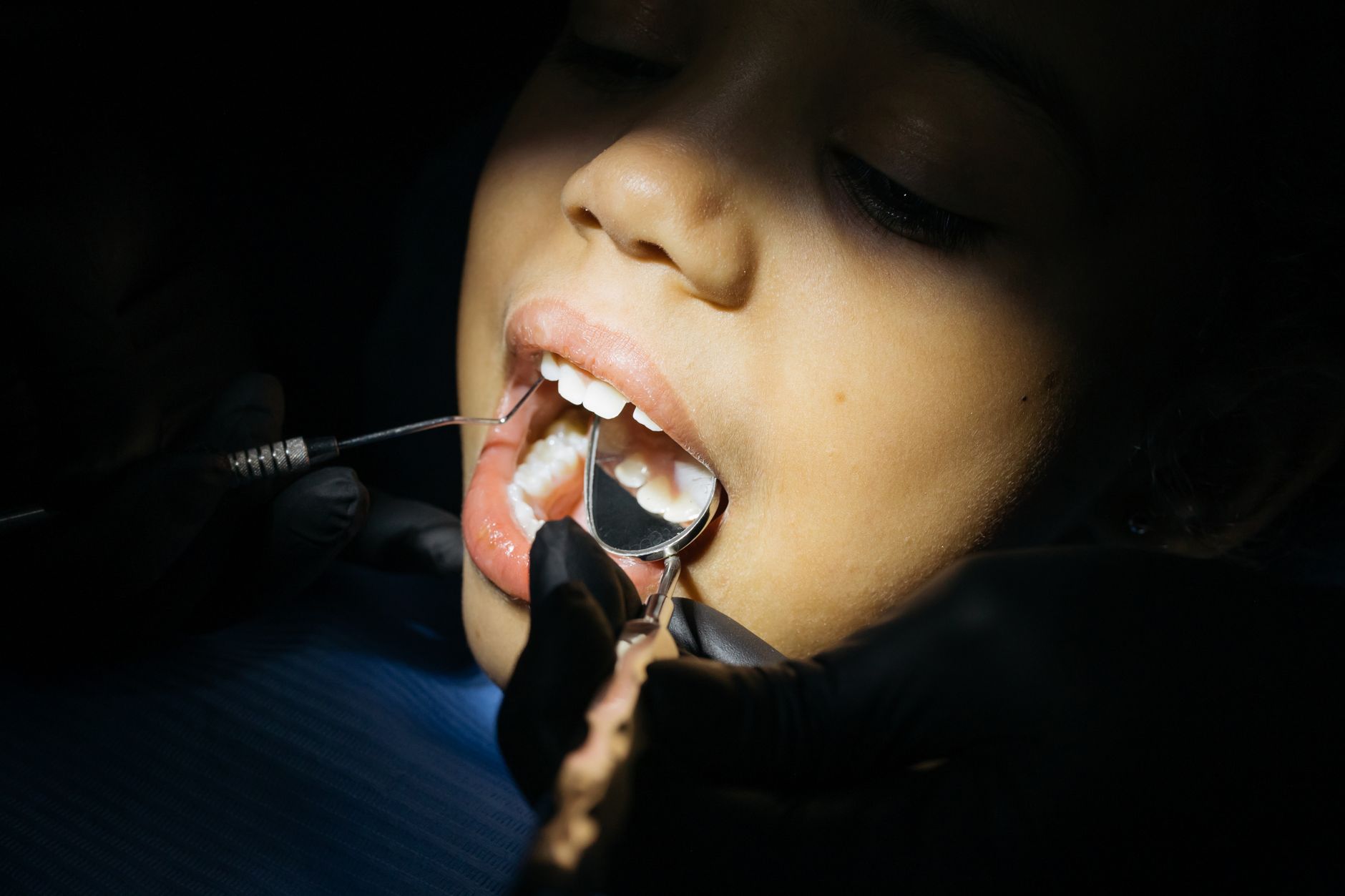
Can a Toothache Affect Your Kid's Grades?
Clinically reviewed by Dr. Abinaash Kaur, DDS, RCDSO, on 2026-09-14. Dr. Kaur is a general dentist in Toronto (Bloor West Village) registered with the Royal College of Dental Surgeons of Ontario.
Yes, and it's not a small effect. Kids with poor oral health are nearly 3 times more likely to miss school because of dental pain, and those pain-related absences are linked to lower grades. A cleaning is easy to put off.
This part isn't.
Late summer is when I see the calendar version of this conversation. Parents are booking eye exams, buying shoes, filling out forms, and the dentist is the one appointment that quietly slides to "later." I get why. I just don't think later is the right call here.
Does dental pain really affect how kids do in school?
Most people assume a toothache is an inconvenience, not something that shows up on a report card. The research says otherwise.
One study found children with poor oral health status were nearly 3 times more likely to miss school because of dental pain than their peers, an odds ratio of 3.89 (school attendance and performance study, PubMed). That's the headline number. The more interesting one is underneath it.
Absences caused by pain were linked to worse school performance. Absences for routine care, a regular cleaning or checkup, were not (PubMed).
Missing school for a filling doesn't hurt a kid's grades. Missing school because a cavity finally became a toothache does.
The same research found oral health mattered for performance separately from missed days too (PubMed). A kid can be sitting right there in the classroom and still be distracted by a mouth that hurts.
Does every kid need a checkup every six months?
Have no fear, I'm not going to give you the tidy answer dental marketing usually gives here. The honest one is more useful anyway.
The Canadian Dental Association's general guidance for families is an exam every six months (CDA). That's a reasonable default, and it's what most practices, including mine, recommend as a starting point.
The research is more textured than that. One clinical review found a 24-month interval didn't increase cavities in healthy, low-risk children and young adults in a randomized trial (checkup frequency review, PubMed). Risk is the real variable, not the calendar. A kid with a history of cavities benefits from more frequent visits. A low-risk kid with strong home habits might genuinely be fine on a longer stretch.
Pretty much every dentist adjusts this in practice already, even when the pamphlet says six months flat. Our post on what decides the right interval goes deep on how we make that call for a specific mouth, not a general one. Come in, and we'll tell you what your kid needs, not a number from a poster.
So why does late summer make sense as the trigger?
This isn't a clinical claim. It's a scheduling one, and it's still worth saying plainly.
September brings sports tryouts, homework, and early mornings all at once. A dental appointment that was easy to slot in during the last slow week of August turns into a real negotiation by October.
If a cleaning is due, or something needs a closer look, booking now means you're not choosing between a filling and a soccer game. That's the whole argument. Nothing more mysterious than that.
There's a second reason, smaller but real. A new school year usually comes with a reset morning routine anyway, earlier alarms, a packed lunch, a backpack by the door. Folding "brush before you leave" back into that routine is easier to do once, at the start, than to patch in later.
What if my kid is anxious about it?
That's common, and it usually isn't about teeth at all. It's about the unknown: a chair, a stranger, sounds they can't see coming.
A few things help more than reassurance alone. Telling a young kid what's about to happen, in plain words, right before it happens, beats a long explanation the night before. Short visits build trust faster than one long one. And your own calm matters more than your words. Kids read a parent's tone before they process what's being said.
If dental anxiety runs deeper than the usual first-visit jitters, in your kid or in you, our post on dealing with fear of the dentist goes further than "don't worry."
What does a back-to-school checkup cover?
A routine visit is an exam, a cleaning, and a look for cavities or anything developing that's worth watching. If your child is due for fluoride or sealants, we'll talk about those too, and what they do, not just whether to add them to the visit.
Fluoride varnish is a concentrated coat painted onto the teeth after cleaning. It hardens the outer enamel and helps it resist the acid that causes cavities. A sealant is different: a thin plastic coating brushed into the deep grooves of back teeth, the spots a toothbrush bristle can't fully reach, so food and bacteria have nowhere to hide. Neither is automatic. We only recommend either one when your child's mouth needs it.
It's also a chance to catch small things while they're still small. A spot that's just starting to demineralize is a very different conversation than the same spot six months later. Our post on whether a cavity can heal itself covers that window in more detail.
None of this requires anything dramatic. Most visits end with "see you in six months" and nothing else.
What if we're already behind?
That happens, and it's not a big deal on my end. Summers get busy, appointments get missed, and a year turns into two before anyone notices.
If it's been a while, that's genuinely a different conversation than a routine checkup, and a common one. Our post for anyone coming back after a long gap was written for exactly that.
If your kid is already in pain right now, skip the general checkup framing entirely. Our emergency guide covers what counts as urgent and what can wait a few days.
If what's actually holding you up is the cost, that's worth sorting out before the appointment rather than after. We've set out what the Canadian Dental Care Plan covers for a child's checkup so you know where you stand going in.
Frequently Asked Questions
Q: Does dental pain affect school performance? Yes. Children with poor oral health were nearly 3 times more likely to miss school because of dental pain, and pain-related absences were linked to lower academic performance (PubMed).
Q: How many school days do kids miss because of dental problems? The research doesn't give one universal number, since it depends heavily on access to care and existing oral health. What it does show clearly is that kids with poor oral health miss substantially more school for dental pain specifically than their peers do (PubMed).
Q: Do kids need a dental checkup every six months? As a general default, yes, that's the standard guidance (CDA). But the evidence supports adjusting that by risk. Low-risk kids may do fine on a longer interval, and higher-risk kids often need more frequent visits (PubMed).
Q: When should I book a back-to-school dental checkup? Late summer, before the school-year schedule fills in, gives you the most flexibility if anything needs follow-up. There's no strict deadline, just a practical window.
Q: What does a routine kids' checkup cover? An exam, a cleaning, and a check for cavities or early problem spots, plus fluoride or sealants if your child is due for them.
Q: What if we haven't been to the dentist in a while? Come in anyway. A gap in care is common and not something we lecture about. We'll start from wherever you are, not where a poster says you should be.
Q: Does this apply to teenagers too, or just younger kids? It applies across the board. The school-attendance research covers school-age kids generally, not just little ones, and teenagers have their own reasons to put off a checkup, exam stress, sports schedules, a general "I'm fine" until something hurts. The same late-summer window works for a 16-year-old as it does for a 6-year-old.
Reviewed by Dr. Abinaash Kaur, B.Sc., DDS (University of Toronto Faculty of Dentistry), who has practised general and family dentistry in Bloor West Village for about 25 years. This article is general oral health information, not a diagnosis, medical advice, or a substitute for an examination.
Want to get the checkup done before the school routine takes over? We're at 750 Annette Street in Bloor West Village, serving the Junction, High Park, and Baby Point. Book with The Village Dentist and we'll find a time that still fits your August.
