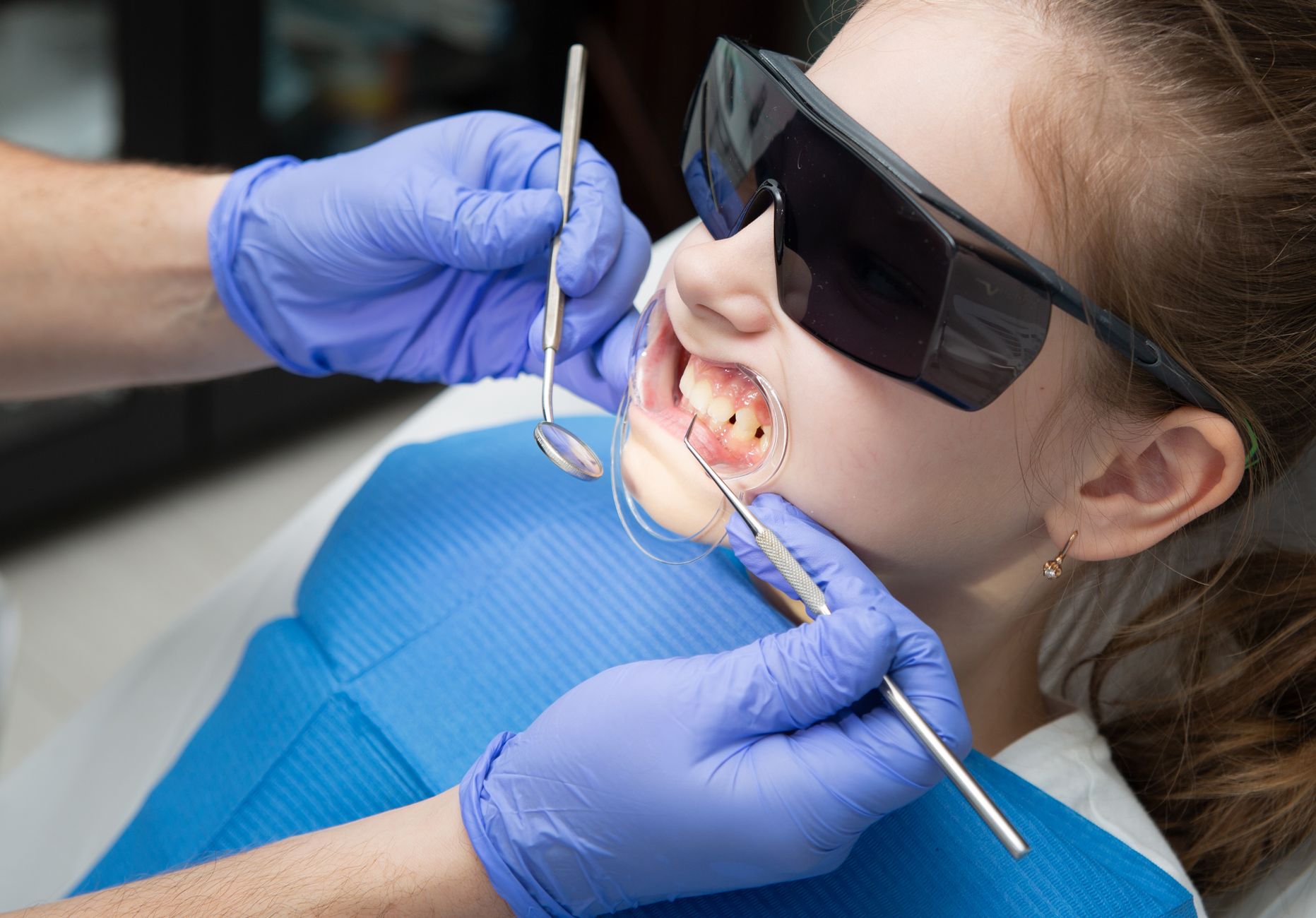
CDCP for Kids and Healthy Smiles Ontario: How They Fit
Clinically reviewed by Dr. Abinaash Kaur, DDS, RCDSO, on 2026-07-30. Dr. Kaur is a general dentist in Toronto (Bloor West Village) registered with the Royal College of Dental Surgeons of Ontario.
No, one doesn't cancel out the other. Your child can be enrolled in Healthy Smiles Ontario and covered by the Canadian Dental Care Plan at the same time, and if both apply, the plans coordinate so the same filling never gets billed twice (Health Canada).
I get asked this at the front desk almost every week. A parent comes in holding two letters, one from Ottawa and one from Queen's Park, convinced that signing up for the second one will somehow undo the first. It won't. Here's how the two plans line up, where they differ, and what to do first.
Does one plan disqualify the other?
Most parents think a provincial program knocks you out of the federal one. Here's what happens instead.
Health Canada is direct about it. If you have dental coverage through a provincial, territorial or federal government social program, you could still qualify for the CDCP, and if you qualify, the plans may coordinate your coverage so there's no duplication (Health Canada). The CDCP application even asks you to list any dental coverage you have through government social programs (Health Canada).
Ontario moved the same way. Children and youth with other dental insurance coverage are no longer automatically excluded from Healthy Smiles Ontario (Ontario Ministry of Health).
The rule that trips families up is a different one. The CDCP asks whether you have access to private dental insurance, through work, a pension, a professional or student organization, or a plan you or a family member bought (Health Canada). A government program isn't private insurance. That's the whole distinction.
Which one should you apply for first?
Start with the one your income qualifies you for, because the two tests are nowhere near each other.
Healthy Smiles Ontario is for children and youth 17 and under who live in Ontario, in a household at or below a set income line. As of July 1, 2026, that line is a family net income of $29,065 or lower for a household with one dependent child, $31,265 with two, and roughly $2,200 more for each additional child (Ontario Ministry of Health). Kids are enrolled automatically if the family receives Ontario Works, the Ontario Disability Support Program, Temporary Care Assistance, or Assistance for Children with Severe Disabilities (Ontario Ministry of Health).
The CDCP has four requirements: no access to private dental insurance, a filed tax return, an adjusted family net income under $90,000, and Canadian residency (Health Canada).
So the order is usually this. If your household income sits at or below the Healthy Smiles line, apply there first, because that plan costs the family nothing. Then apply to the CDCP as well if nobody in the house has a private plan. If you're above the Ontario line but under $90,000, the CDCP is your route, and our guide to who qualifies for the CDCP walks through the income math.
One thing to know before you plan the budget. The CDCP isn't free for everyone. Households under $70,000 pay no co-payment, households between $70,000 and $79,999 cover 40% of the CDCP fees, and households between $80,000 and $89,999 cover 60% (Health Canada). Healthy Smiles has no co-payment at all.
What does each plan cover for a child?
Both plans cover the same broad list: exams, x-rays, cleanings, fluoride, sealants, fillings, root canals, extractions and sedation (Ontario Ministry of Health, Health Canada). The differences live in how often.
| Service | Healthy Smiles Ontario | Canadian Dental Care Plan |
|---|---|---|
| Check-up (recall) exam | 1 per 6 months | 1 in any 12 months |
| First dental visit | covered for any child age 3 and under | 1 per lifetime, ages 3 and under |
| Fluoride | up to 4 per year | 1 in any 6 months, to age 16 |
| Polishing | up to 2 per year | half a unit in any 12 months |
| Cleaning (scaling) | 15 min/year to age 11; 30 min/year ages 12 to 17 | half a unit/year to age 11; 1 unit ages 12 to 16 |
| Bitewing x-rays | up to 2 per 6 months | 8 intraoral images in any 12 months |
| Panoramic x-ray | 1 per 24 months | 1 in any 60 months, 3 per lifetime |
| Sealants | permanent (adult) molars | ages 17 and under, 2 per tooth for life |
| Braces | not covered | not available yet |
| What the family pays | nothing | 0% to 60%, by income |
Where do the two plans differ most?
The check-up. Healthy Smiles covers a recall exam once every 6 months, while the CDCP covers one recall exam in any 12 months (Ontario Ministry of Health, Health Canada).
For a cavity-prone eight-year-old, that gap is the whole ballgame. A child on both plans can have the second visit of the year carried by Healthy Smiles. A child on the CDCP alone gets one covered recall exam in twelve months, and anything sooner is a conversation about paying out of pocket or asking for an exception.
Cleaning time splits the same way. Healthy Smiles measures it in minutes, up to 15 a year for children 11 and under and up to 30 a year for ages 12 to 17 (Ontario Ministry of Health). The CDCP measures it in units, half a unit in any 12 months for ages 0 to 11 and one unit for ages 12 to 16 (Health Canada).
Have no fear if your child needs more than that. Both plans have a door. The CDCP will consider coverage beyond its frequency limits through preauthorization, which your dentist submits before treatment (Health Canada). Healthy Smiles says a child may be eligible for more time if a dental provider determines it's needed (Ontario Ministry of Health). Neither door opens on its own, so tell us if your child's teeth are giving you trouble between visits, and ask whether a shorter recall interval is worth requesting.
Will either plan pay for braces?
Not right now, and this is the answer parents like least.
Healthy Smiles doesn't cover cosmetic or aesthetic services, and braces are named in that exclusion (Ontario Ministry of Health). CDCP orthodontic services aren't available yet either, and Health Canada describes them as coming at a date to be determined (Health Canada).
Read the fine print on what's coming, because it's narrower than the headlines suggest. When CDCP orthodontic coverage does arrive, it will require preauthorization, and for children under 18 the clinical bar is a severe and functionally handicapping malocclusion as set out by the Modified Handicapping Labio-Lingual Deviation Index (Health Canada). A crowded smile that bothers a teenager won't clear that bar. A cleft-related bite problem might.
What if you have a dental plan through work?
This is the part almost nobody gets right, so it's worth slowing down on.
A workplace or pension plan takes your family out of the CDCP. It counts even if you've never used it, even if you chose not to enrol, even if you pay a premium for it, and even if it doesn't cover the full cost of care (Health Canada). You can check your own status on your tax slip: box 45 on a T4 or box 015 on a T4A, where a 1 means no access to dental coverage and a 2, 3, 4 or 5 means your plan offers some (Health Canada).
Healthy Smiles works differently. Other dental insurance no longer excludes a child automatically (Ontario Ministry of Health). So a family with a thin benefits package and a low income can be shut out of the federal plan and still get their kids covered provincially. If you've been told you don't qualify for anything, that's the door worth trying.
Attesting to something inaccurate is the expensive mistake here. If a review finds you had access to insurance, you're removed from the plan and may have to repay what was covered (Health Canada). Our post on why CDCP claims get denied covers the rest of the traps.
Two plans, two renewal calendars
Did you know about this? The plans don't run on the same year, and that's how families end up with a gap.
The CDCP benefit period ends every June 30, and members have to renew each year to confirm they still qualify (Health Canada). Renewals for the 2027 to 2028 benefit year open in spring 2027 (Health Canada). Miss the window and you can still submit a new application, though care received during the gap isn't covered and isn't paid back later (Health Canada).
Healthy Smiles runs August 1 to July 31, and most enrolled children are re-assessed automatically each benefit year, with a notice mailed out (Ontario Ministry of Health). Coverage also ends at a child's 18th birthday, mid-year or not (Ontario Ministry of Health). Kids enrolled through the emergency and essential stream get 6 months and have to re-apply, with a lifetime maximum of three enrolments in that stream (Ontario Ministry of Health).
Put both dates in your phone. June for Ottawa, August for Ontario.
Can you find an office that takes both?
Ontario had 12,510 oral health providers participating in the CDCP as of June 30, 2026, made up of 10,943 dentists and specialists, 650 denturists and 919 independently practising hygienists (Health Canada). More than 2.7 million Ontarians were approved for the plan for the 2025 to 2026 benefit year (Health Canada).
Participation in Healthy Smiles is a separate decision, though. An office can take one plan and not the other, which is why Ontario tells families to phone and ask, or to call their local public health unit if they don't have a dentist (Ontario Ministry of Health). Name both plans when you call. Asking "do you take government coverage?" gets you a vague answer; asking about each plan by name gets you a real one. Our note on whether your dentist participates in the CDCP explains what participation means on our end, and what the CDCP actually covers has the full service list.
Why the paperwork is worth an evening
Because the coverage gap shows up in children's mouths, and the numbers on that aren't subtle.
In the 2019 Canadian Health Survey on Children and Youth, 23.3% of uninsured children and youth faced a cost barrier to seeing a dental professional, against 4.5% of insured children (Statistics Canada). Among 5 to 17 year olds, 93.1% of insured kids had seen a dental professional in the past year, compared with 78.5% of uninsured kids (Statistics Canada). After adjusting for income and other factors, insured children had nearly three times the odds of a visit (Statistics Canada).
The youngest kids are the ones we miss most. That same survey found 79.8% of one-year-olds had never been to a dentist (Statistics Canada), even though the Canadian Dental Association puts the first visit at age one, or within six months of the first tooth coming in (Statistics Canada). Both plans pay for that first visit for children 3 and under (Ontario Ministry of Health, Health Canada). If your toddler hasn't been yet, our first tooth to first visit guide tells you what that appointment looks like, and baby oral health 101 covers what to do at home in the meantime.
What I see in the chair
Some days the schedule pushes me, and this is still a conversation I make time for, because a parent who leaves confused about coverage usually doesn't rebook.
In about 25 years in Bloor West Village I've watched families across the west end skip a child's cleaning over a number they weren't sure about. Sometimes the number was real. Often the coverage was sitting there unclaimed, because a letter got filed in a drawer or a renewal date slipped past in June. Small cavities in baby teeth are cheap and quick to fix. The same tooth eighteen months later is a bigger appointment for a smaller kid, and early decay doesn't reverse itself once it's through the enamel, as we explained in can a cavity heal itself.
Bring the letters. We'll read them with you.
Frequently Asked Questions
Q: Can my child be on both Healthy Smiles Ontario and the CDCP? Yes. Health Canada states that coverage through a provincial, territorial or federal government social program doesn't rule out the CDCP, and that the plans may coordinate coverage so there's no duplication (Health Canada). On the Ontario side, children with other dental coverage are no longer automatically excluded from Healthy Smiles (Ontario Ministry of Health). You apply to each plan separately.
Q: Does applying for Healthy Smiles Ontario make my child ineligible for the CDCP? No. The CDCP eligibility test asks about access to private dental insurance, meaning coverage through work, a pension, a professional or student organization, or a plan you purchased (Health Canada). Healthy Smiles is a government program, not private insurance, so enrolling in it doesn't affect that answer.
Q: What's the income cut-off for Healthy Smiles Ontario? As of July 1, 2026, a household with one dependent child qualifies at a family net income of $29,065 or lower, two children at $31,265 or lower, and each additional child adds about $2,200 to the threshold (Ontario Ministry of Health). Children whose families receive Ontario Works, the Ontario Disability Support Program, Temporary Care Assistance or Assistance for Children with Severe Disabilities are enrolled automatically (Ontario Ministry of Health).
Q: Does the CDCP cover braces for my child? Not yet. Health Canada lists orthodontic services as coming at a date to be determined, with preauthorization required (Health Canada). The published criteria for children under 18 are limited to a severe and functionally handicapping malocclusion as set out by the Modified Handicapping Labio-Lingual Deviation Index (Health Canada). Healthy Smiles doesn't cover braces at all, since it excludes cosmetic services (Ontario Ministry of Health).
Q: My child has coverage through my work plan. Can they still get Healthy Smiles Ontario? Possibly, yes, if your household income is at or below the threshold. Ontario states that children and youth with other dental insurance coverage are no longer automatically excluded (Ontario Ministry of Health). You may be asked for your insurance information at the dental office. That same workplace plan does take your family out of the CDCP, even if you never enrolled in it (Health Canada).
Q: How often is my child's check-up covered? It depends which card they're carrying. Healthy Smiles covers a recall exam once every 6 months (Ontario Ministry of Health), while the CDCP covers a recall exam once in any 12 months (Health Canada). A child covered by both can often have the second visit of the year handled by the provincial plan.
Q: What happens if I miss a renewal? The CDCP benefit period ends June 30 each year and requires an annual renewal (Health Canada). If you miss it you can submit a new application, though there may be a gap in coverage, and dental care received during that gap isn't reimbursed later (Health Canada). Healthy Smiles runs August 1 to July 31 and re-assesses most enrolled children automatically (Ontario Ministry of Health).
Reviewed by Dr. Abinaash Kaur, B.Sc., DDS (University of Toronto Faculty of Dentistry), who has practised general and family dentistry in Bloor West Village for about 25 years. This article is general information about public dental coverage in Ontario, not legal or benefits advice, and program rules change. Confirm current details with Health Canada and the Ontario Ministry of Health.
Not sure which plan your child qualifies for, or whether the card in your wallet still works? Bring the letters to your next appointment and we'll go through them with you before we book any treatment. We're at 750 Annette Street in Bloor West Village, serving the Junction, High Park, and Baby Point. Book your child's check-up with The Village Dentist and we'll tell you what's covered before you agree to anything.
