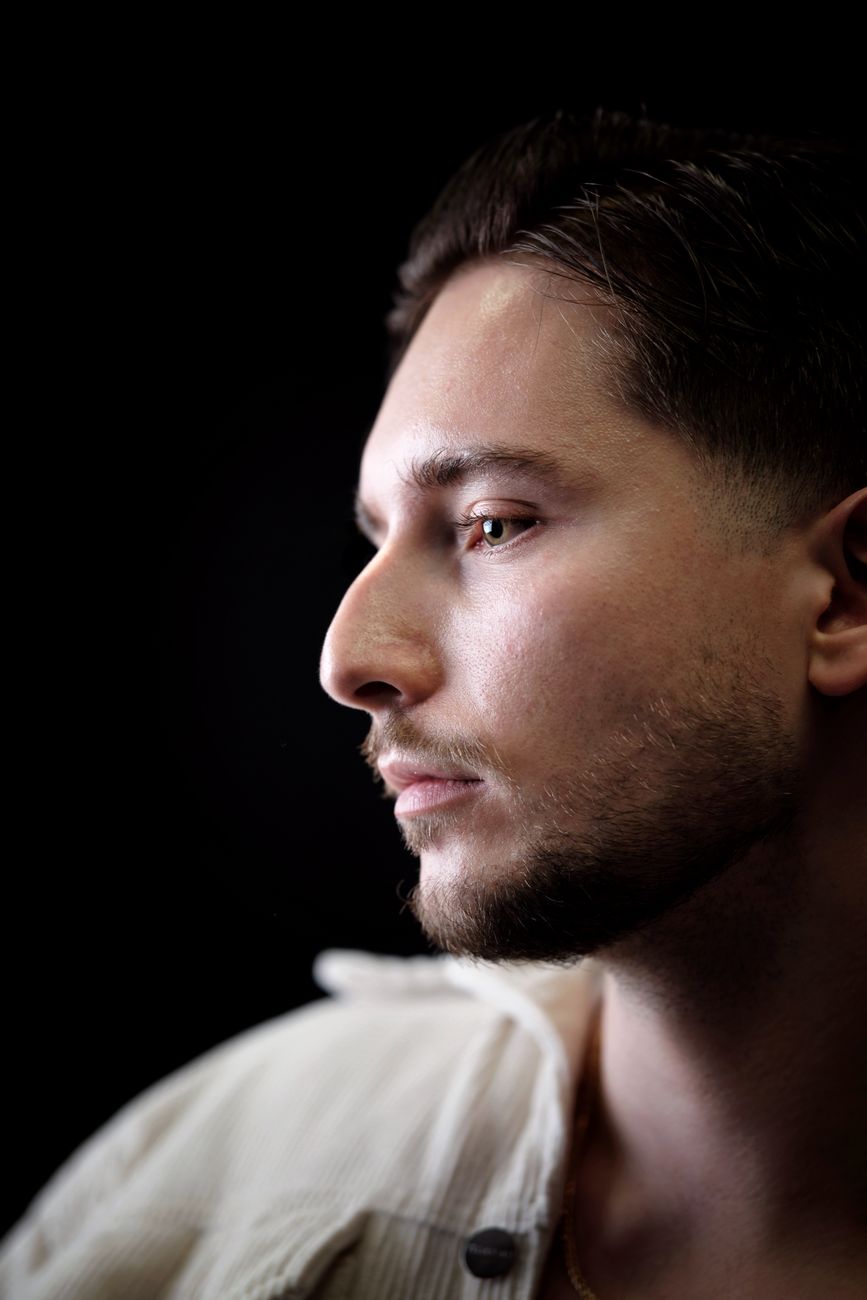
Does Mewing Work? What It Can and Can't Change
Clinically reviewed by Dr. Abinaash Kaur, DDS, RCDSO, on 2026-08-20. Dr. Kaur is a general dentist in Toronto (Bloor West Village) registered with the Royal College of Dental Surgeons of Ontario.
No. Mewing won't reshape a grown jaw, and there's no research showing that tongue posture alone changes adult facial bone (American Association of Orthodontists).
Here's the part that usually gets left out. The idea behind it isn't invented from nothing. Oral habits do shape a face, and they do it while the face is still being built.
I've practised in Bloor West Village for about 25 years, and this one arrives in the chair differently than most trends. It's the teenagers and the young men in their twenties, and they don't ask casually. They've been doing it for months and they want to know whether it's working.
So here's what the research shows, including the one kind of tongue work that has real evidence behind it.
So what is mewing supposed to do?
Mewing is a tongue-posture technique. You rest the whole tongue flat against the roof of your mouth, keep your lips closed and your back teeth lightly together, and hold it there as your default all day.
Two orthodontists developed the practice, which a 2025 research paper describes as "pressing the tip of the tongue against the roof of the mouth" (Sociology of Health and Illness via PubMed Central). The promise attached to it online is a sharper jawline, a straighter bite, and no need for braces.
The technique is named after John Mew, a British orthodontist. The American Association of Orthodontists describes him as having lost his license over unsupported claims (American Association of Orthodontists).
The underlying theory did get published. A 2014 paper in the British Dental Journal proposed a syndrome it called craniofacial dystrophy, arguing that tongue posture and chewing effort had reshaped the human face over thousands of years (British Dental Journal via PubMed). The journal ran three published replies to it that same year (British Dental Journal via PubMed).
That's the origin. A contested theory, not a settled one.
Why does the idea feel so believable?
Because half of it is right, and that's the half people already know.
Most people think mewing is pure invention. It isn't. Oral habits genuinely change a growing face, which is why we pay attention to thumb sucking in small children, and our post on thumb sucking goes into what it does to a developing bite.
The research says something similar about the tongue. A 2025 review of breathing problems during children's sleep lists nasal obstruction and low tongue posture among the craniofacial risk factors for developing them, and concludes that dentists screening early "can significantly influence craniofacial growth" (Journal of Prosthodontics via PubMed Central).
So a dentist reading the mewing claim doesn't think it's nonsense. We think it's a finding about children, sold to adults.
Why doesn't it work on a grown face?
Because the roof of your mouth stops being two pieces.
Your palate has a seam running down the middle of it, and in a child that seam is open. It closes with age in stages. Researchers examined scans from 140 people aged 5 to 58 and sorted the seam into five stages, from an open line through to complete fusion (American Journal of Orthodontics and Dentofacial Orthopedics via PubMed Central).
The open stages showed up mostly before age 13, and the in-between stage mostly between 11 and 17 (American Journal of Orthodontics and Dentofacial Orthopedics via PubMed Central). A later scan study of 263 patients aged 8 to 20 found the fully fused stage becoming steadily more common as age went up (Children via PubMed Central).
The rest of the face follows a similar curve. A study that x-rayed 301 people before treatment, after treatment, and again ten years later found that facial growth does continue past puberty, but the amount "decreases steadily and after the second decade of life seems to be clinically insignificant" (American Journal of Orthodontics and Dentofacial Orthopedics via PubMed).
That's the gap the trend falls into. Widening a grown palate is a surgical job, which is why the Canadian Dental Association lists jaw surgery for cases with "major differences in the size or position of the upper and lower jaws" (Canadian Dental Association).
Your tongue is strong. It isn't a surgeon.
Can pushing on your teeth every day cause damage?
Yes, and the damage is what brings people into my chair rather than keeping them out of it.
Teeth move under sustained light pressure. That's the principle braces run on, and it doesn't switch off because the pressure came from your tongue instead of a wire. The orthodontists' association warns that constant pressure from mewing can loosen teeth, throw off the bite, and add to wear (American Association of Orthodontists).
Uneven pressure is the specific worry. It can push some teeth forward while others stay put, which leaves crooked teeth or new gaps, and the association also names bite problems, jaw joint pain, and speech difficulties among the possible results (American Association of Orthodontists).
Myron Guymon, then president of the association, put it this way in 2024: "While proper tongue posture plays a role in oral health and development, mewing oversimplifies the complexities of facial structure" (American Association of Orthodontists).
If your jaw aches or clicks after months of holding a hard clench, that's worth an exam. Jaw pain has other common causes too, and our post on grinding and clenching covers the one I see most.
Is there a version of tongue work that does have evidence?
There is, and it isn't about your jawline.
Myofunctional therapy is a supervised program of tongue and throat muscle exercises, prescribed for breathing rather than looks. A review pooling nine adult studies found it cut the apnea-hypopnea index, the count of breathing pauses per hour of sleep, by roughly 50% in adults and 62% in children (Sleep via PubMed).
Read what that measured. Breathing pauses, not cheekbones.
The reviewers positioned it as something that "could serve as an adjunct to other obstructive sleep apnea treatments" (Sleep via PubMed). An add-on to real treatment, run by a clinician, aimed at your airway. If snoring or daytime exhaustion is the reason you started reading about tongue posture, our posts on sleep apnea and on mouth taping are the more useful place to start.
Same body part. Different goal, different evidence, different supervision.
Why did this spread so fast?
Because the algorithm rewards the wrong thing, and somebody measured it.
Researchers scored 200 of the most-viewed orthodontic videos across two platforms using validated quality tools. On TikTok, video quality ran in the opposite direction from engagement, meaning the more popular a video was, the lower it tended to score (BMC Oral Health via PubMed Central).
Content from credentialed professionals scored higher on reliability on both platforms (BMC Oral Health via PubMed Central). It just wasn't what the feed pushed hardest.
Did you know about this? It explains a lot about which dental ideas reach you and which ones don't. Our post on viral dental hacks works through the others that keep landing in my chair.
What if you're doing it because of how your face looks?
Then I'd rather talk about that part honestly than pretend the technique is the whole story.
Mewing travels inside a larger online scene built around changing your appearance. Canadian researchers at Dalhousie, UBC and the University of Victoria read 8,072 comments from one such community that draws 6 million unique visitors a month (Sociology of Health and Illness via PubMed Central).
Their conclusion was blunt. These communities "harm the health of the men who participate in them," and the paper describes users engaging in mewing to what it calls a potentially obsessive and harmful degree (Sociology of Health and Illness via PubMed Central).
Have no fear about raising it with us. Nobody here is going to make you feel silly for trying something you read about, and I've heard stranger.
What are the real options if you don't like your jaw?
Start with a proper look at what's going on, because bite and bone are different problems with different answers.
Age isn't the barrier people assume. The Canadian Dental Association is direct about it: orthodontic treatment "isn't just for teens, as teeth can be moved at any age" (Canadian Dental Association). Most people wear braces for about two years, and clear aligners are the other common route (Canadian Dental Association).
If crowding or a bad bite is the issue, that's ordinary orthodontic work, and our comparison of Invisalign and braces lays out the trade-offs. For teenagers specifically, our guide for parents covers timing and compliance.
If the difference sits in the jawbones themselves, no aligner and no tongue exercise reaches it, and the referral is to an oral and maxillofacial surgeon (Canadian Dental Association).
The thing I'd avoid is spending two more years on an unsupervised technique while a treatable bite drifts. Unsupervised tooth movement is its own category of problem, and our post on DIY teeth straightening covers where that leads.
Frequently Asked Questions
Q: Does mewing work? Not for reshaping a jawline. The orthodontists' association states there's "no current research that suggests the technique provides any benefit to your jawline or oral health" (American Association of Orthodontists), and its 2024 release adds that "there's no scientific evidence to support its claims of reshaping the jawline" (American Association of Orthodontists).
Q: Can mewing work if I start young enough? A growing face does respond to oral habits, and low tongue posture appears in the research as a craniofacial risk factor for breathing problems in children (Journal of Prosthodontics via PubMed Central). That's an argument for having a child assessed, not for a child self-treating. The orthodontists' association doesn't recommend attempts to move teeth or align jaws without supervision (American Association of Orthodontists).
Q: Is mewing bad for your teeth? It can be. Chronic pressure can loosen teeth, misalign the bite and contribute to wear, and uneven pressure can push some teeth forward while others stay in place, leaving crooked teeth or gaps (American Association of Orthodontists). Jaw joint pain and speech difficulties are also on the list (American Association of Orthodontists).
Q: How long would mewing take to show results? No timeline exists, because no study has shown the result. When you see a before-and-after online, weigh it against the finding that on TikTok, orthodontic video quality tended to run opposite to popularity (BMC Oral Health via PubMed Central).
Q: What about tongue exercises for snoring? That's a different practice with better support. Supervised myofunctional therapy reduced breathing pauses during sleep by roughly 50% in adults and 62% in children across the pooled studies, and the reviewers framed it as an adjunct to other sleep apnea treatment rather than a replacement (Sleep via PubMed). Ask about it as part of a proper airway assessment.
Q: Can an adult still get a narrow palate widened? Not with tongue pressure. The seam in the roof of the mouth fuses with age, and scans of 140 people aged 5 to 58 traced that closing across five stages (American Journal of Orthodontics and Dentofacial Orthopedics via PubMed Central). Where the jaws themselves differ in size or position, the Canadian Dental Association names jaw surgery as the treatment (Canadian Dental Association).
Reviewed by Dr. Abinaash Kaur, B.Sc., DDS (University of Toronto Faculty of Dentistry), who has practised general and family dentistry in Bloor West Village for about 25 years. This article is general oral health information, not a diagnosis or a substitute for an examination.
Wondering whether your bite or your jaw is behind what you're seeing in the mirror? Come in and we'll look, tell you what's bone and what's teeth, and go through the options that would move each one. We're at 750 Annette Street in Bloor West Village, serving the Junction, High Park, and Baby Point. Book a visit with The Village Dentist and we'll take it from there.
