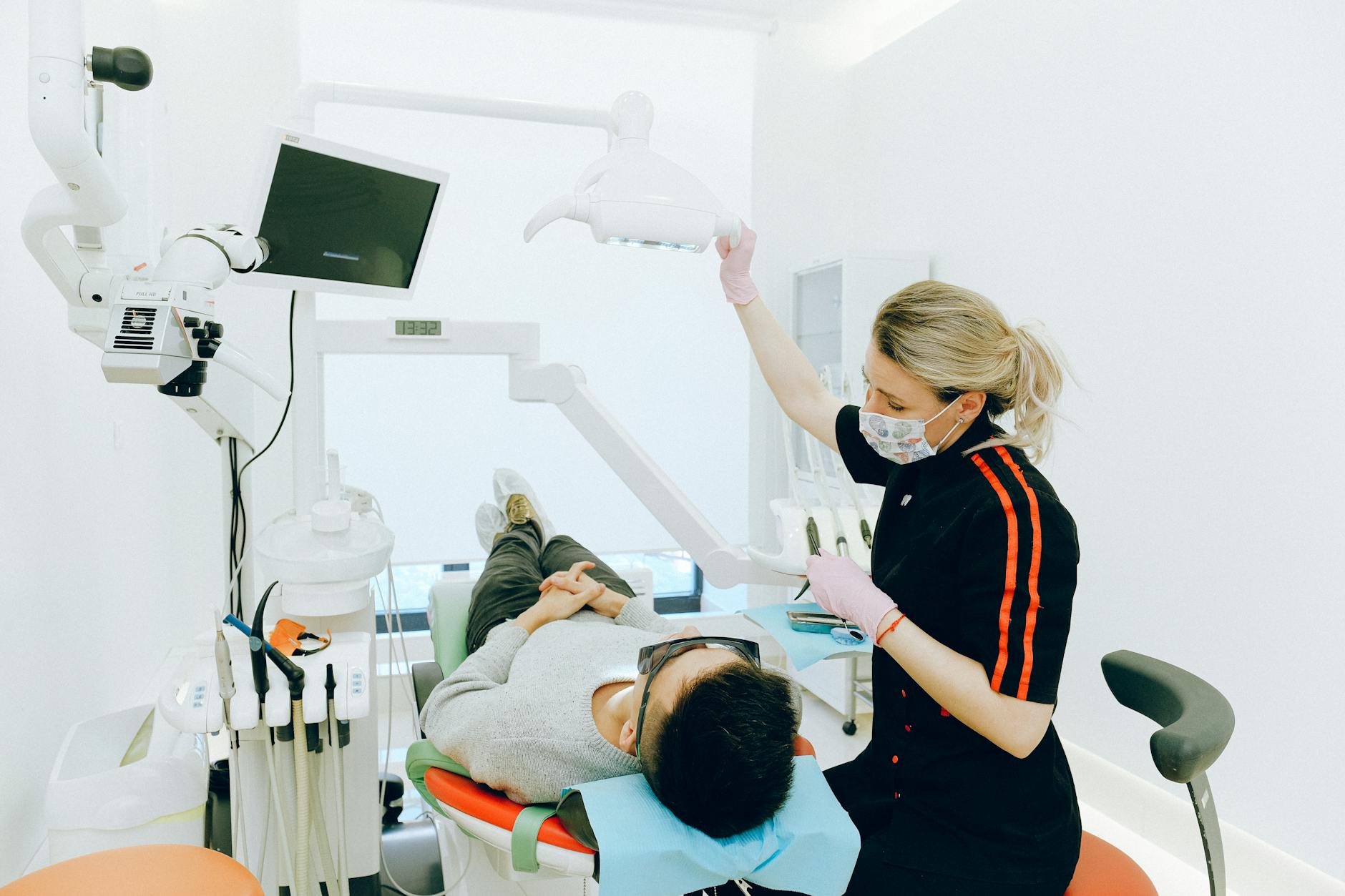
DIY Teeth Straightening: Why It Can Wreck Your Smile
Clinically reviewed by Dr. Abinaash Kaur, DDS, RCDSO, on 2026-08-20. Dr. Kaur is a general dentist in Toronto (Bloor West Village) registered with the Royal College of Dental Surgeons of Ontario.
Can you straighten your own teeth at home? Please do not. DIY teeth straightening is one of the few trends that can cause damage I cannot reverse. Looping a little elastic band around your front teeth, or trimming mail-order aligners with no dentist involved, can cost you healthy teeth. I straighten teeth for a living, hundreds of cases over about 25 years on Annette Street, so I am not anti-saving-money. I am anti-losing-teeth. Here is what happens inside your mouth.
Why would anyone straighten their own teeth?
The appeal is obvious: it looks cheaper, and there are no appointments. Social media is full of clips of people closing a gap with a hair elastic or ordering clear trays by mail. Most people think teeth are like beads you can just slide along a string. What gives? Teeth sit in living bone, and moving them is a medical procedure, not a craft project.
The "gap band" trend is the dangerous one
Ever seen someone loop a small elastic around two front teeth to close a gap? That one scares me most. Here is the part the videos never show. A band under tension does not stay put. It creeps up the tooth and slips under the gumline, where you cannot see it and often cannot feel it anymore.
Once it is below the gum, it keeps tightening around the root and cuts through the fibres and bone that hold the tooth in place. The American Association of Orthodontists has shared a real case of a boy who used an elastic gap band and lost more than 75 percent of the bone supporting his front teeth, which could not be saved (American Association of Orthodontists). This is not a one-off scare story. In a peer-reviewed orthodontic journal, a 9-year-old lost both upper front teeth after a DIY elastic gap band caused severe gum infection, and the authors concluded these bands should be avoided (American Journal of Orthodontics, via PubMed). A separate published case documented a band that slipped below the gum and destroyed bone down to the root tip, leaving otherwise healthy front teeth nearly hopeless (Clinical Case Reports, via PMC).
By the time it hurts, the damage to the bone is often done. A thirty-cent elastic should never cost you a front tooth.
What about mail-order (direct-to-consumer) aligners?
Mail-order aligners feel safer because they look like the real thing. The trays are real. What is missing is everything that is supposed to happen before the trays. No in-person exam. No x-rays. No one watching month to month.
That matters more than it sounds. The American Association of Orthodontists warns that moving teeth is a medical service, not a mail-order product, and that doing it without an in-person exam and x-rays can move teeth that have undiagnosed gum disease or decay, sometimes leading to gum loss, changed bites, or even nerve damage (American Association of Orthodontists). You should never push on a tooth sitting in unhealthy bone, and at home you have no way to know.
The biggest direct-to-consumer aligner company, SmileDirectClub, makes the point for me. It filed for bankruptcy and shut down at the end of 2023, then converted to liquidation in early 2024 (Wikipedia). That left more than 2 million customers, including Canadians, stranded mid-treatment with a voided lifetime guarantee (Global News). Dental groups warned about patients being abandoned with no clinician to call (California Dental Association). I have since written up what happened to SmileDirectClub and Byte from the court and regulator records, including the FDA recall notice that faulted the virtual-only screening rather than the trays. Cheaper stops being cheaper the moment something goes wrong and no dentist is attached to your case.
What can go wrong even when nothing slips?
So what if the band stays put or the trays seem to fit? Force without a plan still causes problems.
Root resorption. That is when the body shortens the root of a tooth under sustained, unmanaged pressure, and it is largely irreversible (International Dental Journal, via PMC). Shorter roots mean looser teeth for good. There is also tipping, where you close a gap at the crown while the roots splay apart underneath, so it looks fine for a month and then relapses. And there is bite collapse, where moving a few teeth throws off how the rest meet, which brings on chipping and jaw soreness. Monitoring for these is a big reason supervised treatment exists.
What does safe straightening look like?
Wait, is there a right way to straighten teeth? Yes, and it is not gatekeeping, it is just supervised. Before a single tooth moves, there is an exam, x-rays to see the roots and bone, and a plan for how each tooth should move and where the bite lands. Then someone watches it happen and adjusts when it does not go to plan.
That is the whole reason Invisalign or braces work and a kiosk kit is a gamble. The clear trays are only as good as the diagnosis behind them. If you are curious whether you are even a candidate, I wrote an honest breakdown of who Invisalign is for, what it costs in Toronto, and how long it takes. No sales pitch, just the numbers. The same goes for filing your own teeth, another trend I have written about in TikTok teeth filing, and for mewing, where the pressure comes from your own tongue instead of a band.
What if you already tried a DIY method?
Do not panic, but do not wait either, especially if you used any kind of band. If an elastic feels like it has disappeared, assume it is under the gum and come in promptly, because the sooner it is removed, the more tooth we can save. If you have been wearing mail-order trays and something feels off, like looseness, soreness, or gums that bleed or recede, a quick exam tells us whether it is safe to keep going. There is no lecture waiting for you. We just want to catch problems while they are small.
The honest bottom line
I understand the pull completely: straighter teeth, less money, no appointments. Teeth are not beads on a string, though. They are anchored in living bone, and force without a diagnosis is how people lose teeth they were trying to fix. If your smile bothers you, that is real and fixable. Have no fear. We are at 750 Annette Street in Bloor West Village, near the Junction, serving High Park and Baby Point Gates. Come in and let us show you a way to do it that is still there in twenty years.
Frequently Asked Questions
Q: Is it safe to close a gap in my teeth with an elastic band? No. Elastic "gap bands" can slide under the gumline and cut through the bone and fibres that hold a tooth in place. The American Association of Orthodontists has documented a case where a child lost more than 75 percent of the supporting bone and could not keep his front teeth (AAO), and a peer-reviewed report describes a 9-year-old losing both upper front teeth this way (PubMed).
Q: Are mail-order or direct-to-consumer aligners safe? They carry real risk because they skip the in-person exam, x-rays, and supervision that catch gum disease and decay before teeth are moved (AAO). The largest such company, SmileDirectClub, shut down at the end of 2023 and left more than 2 million customers without a provider (Global News).
Q: Can DIY straightening cause permanent damage? Yes. It can cause gum and bone loss, loose teeth, and root resorption, which is largely irreversible (PMC). Some teeth that are damaged this way cannot be saved.
Q: What makes professional straightening different? A licensed dentist or orthodontist takes x-rays, checks your gums and bone, plans how each tooth should move, and supervises the whole process. That is what makes Invisalign or braces safe, and what a mail-order kit cannot offer.
Q: I already used a gap band or mail-order trays. What should I do? Come in for an exam soon, especially if a band feels like it has disappeared under the gum. Early removal saves more tooth, and a quick check tells us whether any movement is safe to continue. There is no judgment, just care.
Reviewed by Dr. Abinaash Kaur, B.Sc., DDS (University of Toronto Faculty of Dentistry), who has practised general and restorative dentistry on Annette Street in Bloor West Village for about 25 years. This article is general information, not a diagnosis. If you are worried about damage from a DIY method, book a consult so we can look at your specific case.
