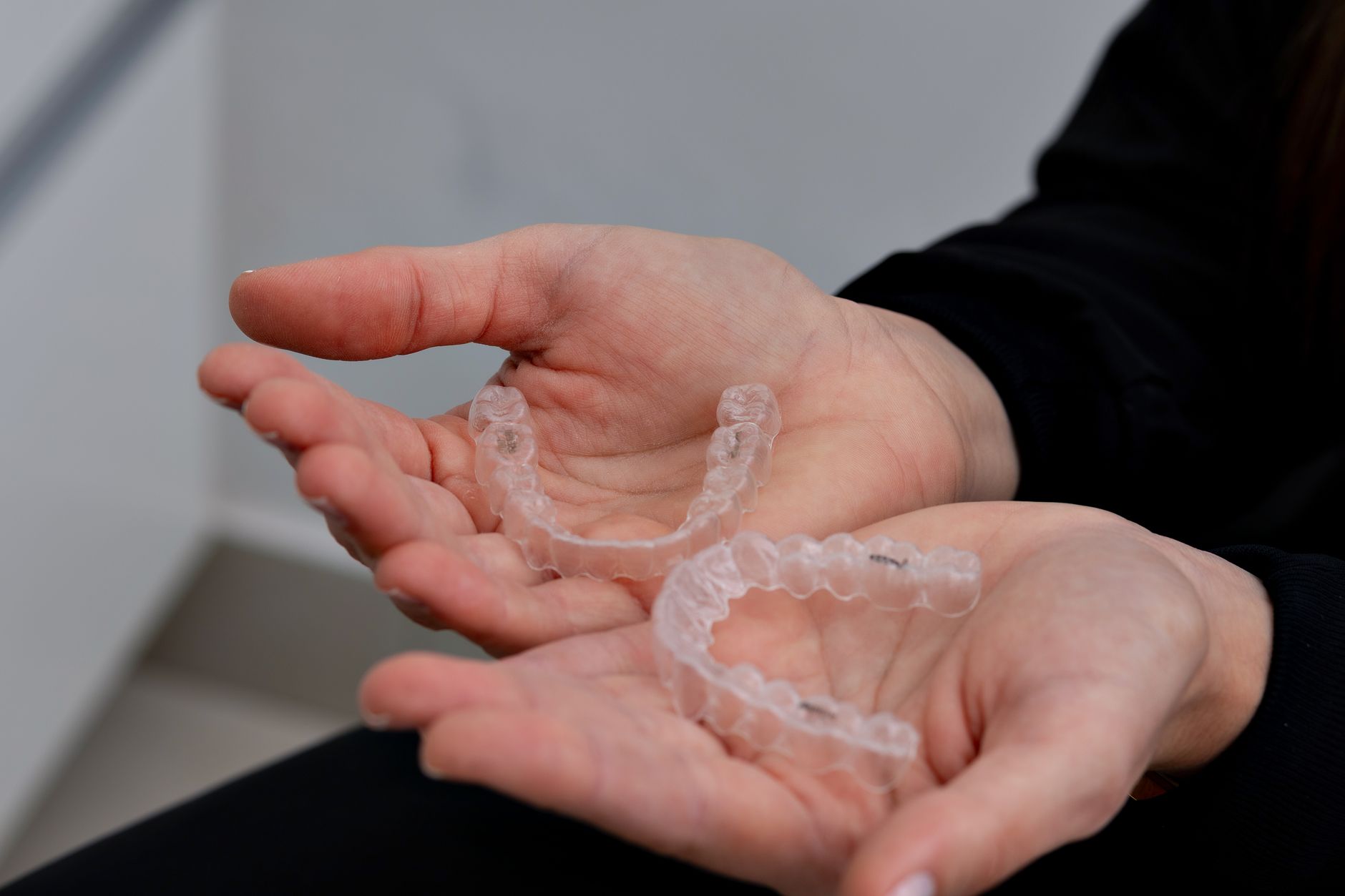
CDCP and Invisalign: Why It's Not Covered, What Helps
Clinically reviewed by Dr. Abinaash Kaur, DDS, on 2026-05-24. Dr. Kaur is a general dentist in Toronto registered with the Royal College of Dental Surgeons of Ontario (RCDSO).
Last updated 2026-05-24. Fact-checked against Canada.ca CDCP orthodontic coverage status and the Dental Benefits Guide Exclusions Appendix.
Short answer: CDCP does not cover adult Invisalign or any cosmetic orthodontics. Limited orthodontic services for children under 18 with severe malocclusion are planned to become available "at a date to be determined." As of May 2026 there is no firm start date. Here's the honest explanation of why, what's currently in scope (and what isn't), and the alternative pathways that actually work if you need orthodontic treatment without coverage.
Key Takeaways
- Adult Invisalign is not covered. This includes Invisalign, clear aligners from other manufacturers, and traditional braces for adults.
- Limited child orthodontic services are planned for severe malocclusion under 18. Coverage "at a date to be determined." No firm 2026 start.
- What IS covered: the dental exam, cleaning, x-rays, and extractions that may be part of ortho preparation. These run normally on CDCP.
- Alternative pathways: in-house dental financing, third-party medical financing (Medicard, iFinance), dental school clinics, and provincial dental programs for children.
- The Toronto reality: Invisalign at most general practices runs $3,500-$8,000 depending on case complexity. Financing makes it monthly-budget manageable.
What the official position actually says
Per Canada.ca's CDCP coverage page: orthodontic services are listed as part of the planned coverage, with the line "A specific range of orthodontic services will be available in the future, at a date to be determined." That language has been on the page since 2024. No specific 2026 start has been announced.
When orthodontic coverage does come online, it's expected to be limited to children under 18 with severe malocclusion documented through specific clinical criteria. Adult orthodontics is not expected to be added.
In the Dental Benefits Guide's Exclusions Appendix, "orthodontic services for cosmetic purposes" is listed as a hard exclusion. This includes adult Invisalign for aesthetic improvement, which is the most common adult ortho use case.
Why adult ortho isn't covered
The official rationale (paraphrased from program documentation):
- Cost containment at program rollout. CDCP was designed to address the most common dental access gaps first: exams, fillings, extractions, dentures, basic restorative care.
- Orthodontics is expensive per case. A single adult Invisalign case ($3,500-$8,000) costs more than a typical patient's lifetime of preventive care under CDCP.
- The clinical line between cosmetic and functional. Many adult ortho cases are aesthetic; functional cases that medically require correction would qualify for the child severe-malocclusion exception when it comes online.
What CDCP DOES cover that intersects with ortho
If you're considering or in active orthodontic treatment as a private patient, CDCP can still cover the supporting work:
- Pre-treatment dental exam and x-rays: standard CDCP coverage
- Cleaning before ortho: standard CDCP coverage
- Extractions required for ortho (e.g., bicuspid extractions to create space): covered, often with preauthorization
- Restorative work (fillings) before ortho starts: standard CDCP coverage
- Post-ortho retainer maintenance: the retainer itself isn't covered, but check-ups are
Alternative pathways if you need Invisalign or braces
Option 1: In-house dental financing
Many dental practices (including The Village Dentist) offer in-house payment plans, typically zero-interest, spread over 12-24 months. A $5,500 Invisalign case becomes roughly $230-$460/month depending on term length.
Pros: No credit check at most practices; direct relationship with the dental office; predictable monthly cost. Cons: Requires the practice to offer it; not all do.
Option 2: Third-party medical financing
Companies like Medicard, iFinance, and Dentalcard offer dedicated medical/dental financing in Canada, often with promotional 0% interest for 6-24 months. Approval is credit-based.
Pros: Larger amounts available; longer terms; works at any practice that accepts the financing provider. Cons: Credit check; interest after promotional period; total cost can exceed cash price if you're not careful.
Option 3: Dental school clinics
University dental schools (U of T, Western, McGill, UBC, Alberta, Manitoba, Dalhousie, Saskatchewan) operate teaching clinics with significantly reduced fees, including for orthodontics. Treatment is provided by supervised students.
Pros: Often 30-50% lower cost than private practice; high-quality supervised work. Cons: Longer treatment time (more visits); availability depends on location and case suitability.
Option 4: Provincial programs (children only)
For children, provincial dental programs can help with severe-malocclusion orthodontic cases. In Ontario, Healthy Smiles Ontario covers some specialized treatment. In other provinces, similar child-focused programs exist. These are means-tested.
Option 5: Wait for CDCP child-ortho coverage
For children with severe malocclusion: when CDCP's planned child-ortho coverage activates, this will be the strongest option. Talk to your dentist about treatment timing and whether deferral is clinically appropriate.
From Dr. Kaur
"The Invisalign question is the second-most-common CDCP question we get, right after 'do you accept CDCP?' I tell patients the honest answer: no, and here's what does work. Most adults who want Invisalign and qualify for CDCP are at the 0% co-pay bracket, which means they're income-constrained. For those patients, our in-house financing makes a $4,500 case work at $190 a month over two years. CDCP covers everything else they need (cleanings, exams, the occasional filling); Invisalign is a separate financial decision. The patients I see succeed with this are the ones who plan it as 'CDCP for everything routine, financing for the smile work.'" > Dr. Abinaash Kaur, DDS, The Village Dentist, 750 Annette St, Toronto
Frequently Asked Questions
Will CDCP ever cover adult Invisalign? Highly unlikely based on the current program design. Adult cosmetic ortho is in the Exclusions Appendix. The planned future expansion is for child severe-malocclusion only.
My child needs braces. Does CDCP cover it? Not yet, but planned. Limited orthodontic services for children with severe malocclusion are scheduled to come online "at a date to be determined." Until then, look at provincial child-dental programs (Healthy Smiles Ontario, etc.) or financing.
What if my orthodontic case is medically necessary, not cosmetic? The current exclusion is for orthodontics "for cosmetic purposes." Medical-necessity ortho for children is in the planned future coverage. Adult medical-necessity ortho is more ambiguous in the documentation. Talk to your dentist about whether your case might qualify when child ortho launches, or whether it's adult-scope (which remains excluded).
Are Invisalign retainers covered after treatment? No. Retainers are part of the orthodontic treatment package and are excluded.
Does CDCP cover the dental exam or cleaning if I'm in active Invisalign treatment? Yes. Routine CDCP-covered services (exams, cleanings, x-rays, fillings, extractions) continue normally regardless of whether you're in private ortho treatment.
What about the panorex / 3D scan needed for Invisalign planning? If the imaging is specifically for orthodontic planning, it's typically not separately covered. If it's a routine diagnostic image that happens to also inform ortho planning, your dentist may bill it differently. Ask before the appointment.
Can I get a CDCP-covered cleaning even if my orthodontist isn't a CDCP provider? Yes. You can have your cleaning at any CDCP-participating dentist, and your orthodontic treatment at any orthodontist (CDCP-enrolled or not). Coverage and care are decoupled across providers.
References
- Government of Canada. What services are covered in the Canadian Dental Care Plan. https://www.canada.ca/en/services/benefits/dental/dental-care-plan/coverage.html
- Government of Canada. Canadian Dental Care Plan: Dental Benefits Guide. https://www.canada.ca/en/services/benefits/dental/dental-care-plan/guide.html
- Government of Canada. Canadian Dental Care Plan. https://www.canada.ca/en/services/benefits/dental/dental-care-plan.html
- Canadian Dental Association. Orthodontic services. https://www.cda-adc.ca/en/oral_health/
Bottom line
CDCP does not cover adult Invisalign, traditional braces, or any cosmetic orthodontics. Planned limited coverage for children under 18 with severe malocclusion is "at a date to be determined" and not active in 2026. Adult patients who want Invisalign use one of four alternative pathways: in-house dental financing, third-party medical financing, dental school clinics, or paying privately. CDCP continues to cover all the routine dental care that doesn't involve the orthodontic treatment itself, such as cleanings, exams, fillings, and extractions, so your basic dental care remains covered while you handle ortho separately.
Need help with Invisalign or your CDCP coverage?
If you're in Toronto or the GTA: We're a CDCP-participating dental practice at 750 Annette St in Bloor West Village. We offer in-house financing for Invisalign cases. Book a consultation or call (416) 760-0404. For Invisalign specifics, see our Invisalign page.
If you're outside the GTA: Use the CDCP provider search on Canada.ca to find a CDCP-participating dentist; ask any local orthodontist about financing options for ortho work itself.
Related posts
- Canadian Dental Care Plan (CDCP) 2026: Complete Guide
- What CDCP Actually Covers in 2026
- Does CDCP Cover Extractions in 2026?
Related reading: our full Invisalign price guide · how many months Invisalign usually needs · what a monthly payment plan looks like · what private dental insurance pays toward Invisalign
