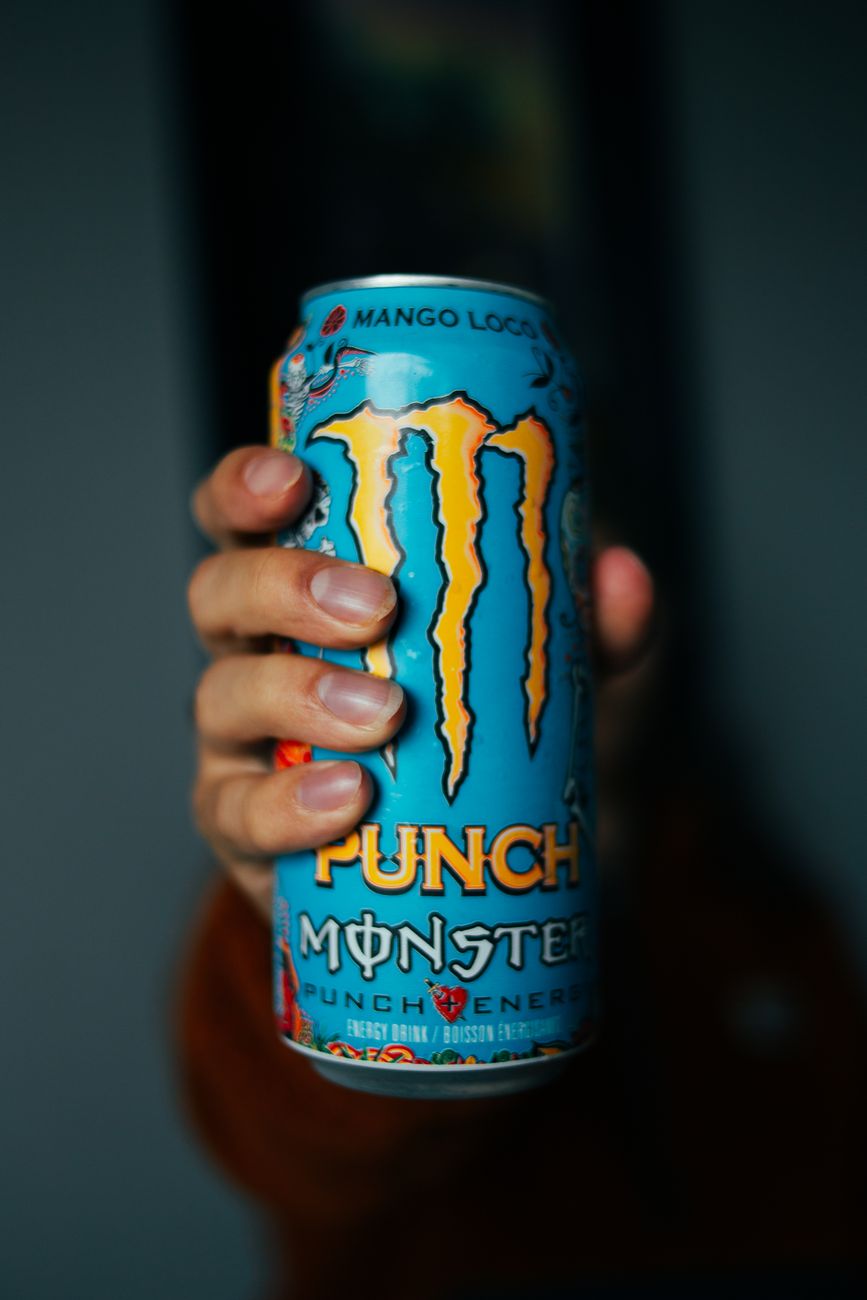
Is Your Teen's Energy Drink Habit Bad for Their Teeth?
Clinically reviewed by Dr. Abinaash Kaur, DDS, RCDSO, on 2026-08-10. Dr. Kaur is a general dentist in Toronto (Bloor West Village) registered with the Royal College of Dental Surgeons of Ontario.
Yes, and probably not for the reason you'd guess. Energy drinks damage teeth two separate ways at once: the acid eats into enamel on contact, and the sugar feeds the bacteria that cause cavities. A sugar-free can skips the second problem. It does nothing about the first.
I see this a lot in my chair these days. A teenager comes in for a checkup, brushes twice a day, flosses more than their parents do, and still has enamel that looks thinner than it should for their age. The clue is usually sitting in their backpack.
What gives? Isn't it just the sugar?
Most people think drink damage to teeth comes down to sugar content. That's only half the story.
Sugar causes decay indirectly. Bacteria in plaque eat the sugar and produce acid as a byproduct, and that acid dissolves enamel over time. Energy drinks skip the middleman. Most are acidic enough on their own to start dissolving enamel the moment they touch a tooth, sugar or no sugar.
Enamel starts breaking down once the pH around it drops below about 5.5. Dentists call that the critical pH (pathogenesis of dental erosion, PubMed). Below that line, minerals leach out faster than saliva can put them back. Water sits at a neutral pH of 7. Most energy drinks sit closer to 2.5 or 3.
That's already well past the point where damage starts.
The Canadian Dental Association's own position on children's diets names this exact combination. Drinks with "high sugar content and acidity such as fruit juices, sports and energy drinks and sodas" can cause "significant caries and erosion to tooth enamel, especially when consumed frequently and over time" (CDA).
How acidic are energy drinks, really?
A lab study that measured several popular brands directly found pH values from 2.36 to 3.41 (enamel erosion study, PMC). For scale, that's roughly the acidity of lemon juice.
TNT Energy Drink came in lowest at 2.36. Red Bull measured 3.09. Monster measured 3.41 (PMC). When researchers tested real enamel samples against these drinks, TNT caused the most surface hardness loss, mineral loss, and depth of damage, with Red Bull and Monster close behind (PMC).
Are energy drinks worse for teeth than soda?
Have no fear, I'm not going to hand you a tidy yes here. The research doesn't agree with itself.
That lab study above found the energy drinks it tested more erosive than Coca-Cola, even though the cola itself measured more acidic by raw pH (PMC).
Acidity alone doesn't decide the outcome.
A separate study on buffering capacity, which is how hard a drink fights back against your saliva's attempt to neutralize it, found Red Bull had the strongest erosive potential of everything tested, ahead of Gatorade, Coca-Cola, Diet Coke, and a coffee drink (PubMed).
Then a study done in real mouths, not a lab dish, found close to the opposite. Regular soda dropped plaque pH further than a high-energy drink did. Both dropped it further than a diet soft drink (in vivo plaque pH study, PubMed). That same trial didn't measure a pH drop steep enough to cause damage on its own that day, likely because saliva was doing real protective work in a way a lab dish can't replicate.
Pretty much every researcher agrees on one thing regardless. Soda, sports drinks, and energy drinks all sit closer together on the damage scale than any single headline wants to admit (PubMed).
What does the acid do once it hits a tooth?
Picture enamel up close. It's built from tightly packed mineral crystals, arranged in a pattern dentists call a prism.
Acid dissolves that pattern unevenly, leaving a honeycomb-shaped surface behind (PubMed). That's not something a toothbrush did.
It's the drink.
This matters because enamel doesn't grow back. The cells that build it, called ameloblasts, are gone by the time a tooth is in your mouth, so there's nothing left to repair a worn or pitted surface once it's damaged (enamel regeneration review, PMC). Our post on whether a cavity can heal itself covers where remineralization helps and where it can't. Fluoride can rebuild a weak spot before it cavitates. It can't rebuild enamel that's already eroded away.
How much caffeine is in that can?
Here's a number that surprised me more than the pH values did.
Health Canada caps caffeinated energy drinks at 180 mg of caffeine per serving (Canada.ca). Every can sold here has to carry the words "Not recommended for those under 14 years old" (Canada.ca). And Health Canada's own guidance says kids and teens under 18 shouldn't have more than 2.5 mg of caffeine per kilogram of body weight a day (Canada.ca).
Run the math for a smaller young teen, say around 45 kilograms. Their whole day's recommended limit works out to about 112 mg. One can, at the legal maximum, can already use up that entire limit on its own, before a school-day coffee, iced tea, or chocolate bar even enters the picture.
So what helps?
None of this means banning every can in the house. I don't think that works anyway, and most teenagers respond to a ban about as well as you'd expect.
A few habits genuinely help. Drinking through a straw keeps most of the liquid off the teeth. Finishing a can with a meal, instead of sipping it for an hour at a desk, cuts down how long the acid sits on enamel. Rinsing with plain water afterward helps too.
Here's the one that trips people up. Don't brush right after. Enamel is temporarily softened right after an acid hit, and brushing on top of that can wear away even more of it. Rinse with water, and save the toothbrush for half an hour later.
Chewing sugar-free gum afterward helps your own saliva do the neutralizing work faster. A fluoride toothpaste, or a hydroxyapatite one, gives the enamel surface something to rebuild with between drinks. Our comparison of hydroxyapatite and fluoride toothpaste walks through both, and fluoride in Toronto's water covers what your teen is already getting before they pick up a toothbrush at all.
What should you watch for?
Sensitivity is usually the first sign, a twinge on something cold or sweet that wasn't there before. Our post on what causes tooth sensitivity covers what that twinge usually means.
A yellowish tint creeping in near the gumline is another one. That's often the darker dentine layer showing through enamel that's grown thin.
Frequency matters more than any single can. A teenager who has one energy drink at a birthday party is a different conversation than one working through a can most afternoons during exam season. If yours is closer to the second pattern, that's worth a checkup, not a lecture. Our post on snacking smart has more on why how often matters as much as what.
Frequently Asked Questions
Q: Do energy drinks damage teeth, or is that overstated? It's real and measurable. Lab studies that expose enamel samples directly to popular energy drink brands consistently find surface softening, mineral loss, and visible damage (PMC).
Q: Are sugar-free energy drinks safer for teeth? Safer against cavities, not against erosion. Sugar-free versions still carry the acid that erodes enamel on contact, so the decay risk drops but the erosion risk doesn't (PubMed).
Q: Are energy drinks worse than soda for teeth? It depends which study you read. Some lab research finds energy drinks more erosive than cola, while a study measuring real plaque pH found regular soda dropped it further than a high-energy drink did (PubMed). Neither is a safe substitute for the other.
Q: How much caffeine is in one energy drink? Health Canada limits caffeinated energy drinks to 180 mg of caffeine per serving, and every can has to say it isn't recommended for anyone under 14 (Canada.ca).
Q: Should I brush my teeth right after drinking an energy drink? No. Enamel is temporarily softened right after acid exposure, and brushing then can wear away more of it. Rinse with water and wait about 30 minutes before brushing.
Q: Can eroded enamel grow back? No. Enamel has no living cells once a tooth has erupted, so it can't repair or regenerate the way skin or bone does (PMC). Prevention is the only real tool once a tooth is fully formed.
Q: What about sports drinks like Gatorade? Are those safer? Different category, similar problem. Sports drinks are usually less acidic than energy drinks, but one study on buffering capacity still ranked Gatorade as more erosive than Coca-Cola or Diet Coke (PubMed). Water is still the better choice for everyday hydration, energy drink or not.
Reviewed by Dr. Abinaash Kaur, B.Sc., DDS (University of Toronto Faculty of Dentistry), who has practised general and family dentistry in Bloor West Village for about 25 years. This article is general oral health information, not a diagnosis, medical advice, or a substitute for an examination.
Worried about a teenager's enamel, or just want a second opinion before their next checkup? We're at 750 Annette Street in Bloor West Village, serving the Junction, High Park, and Baby Point. Book an exam with The Village Dentist and we'll take a real look, no lecture required.
